Image Credit: Anil Baki Durmus on Unsplash
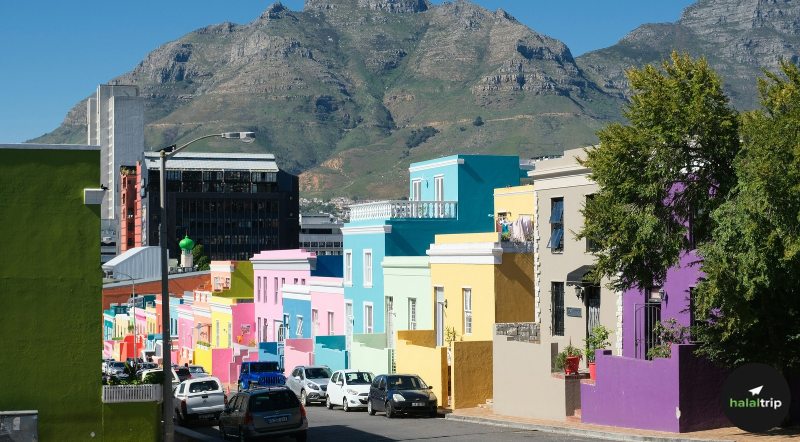
As morning mist lifts Table Mountain, the golden light of early dawn washes over the cobblestones of Chiappini Street. Turn any corner on the slopes of Signal Hill, and your senses will instantly be awakened to vibrant colors–bright turquoise, sunlit saffron, vivid lime, and magenta facades.
To many travelers, this historic neighborhood overlooking central Cape Town might simply be an irresistible backdrop for holiday photographs. However, long before Bo-Kaap became celebrated for its colorful streets, it was an enclave forged in hardship, exile, and faith. For more than three centuries, the Cape Malay Muslim community has guarded its spiritual traditions here, transforming the pain of displacement into resilience that continues to define the soul of South Africa’s Mother City.
The Ocean of Exile: How Islam Reached the Cape
The history of Islam at this southern tip of Africa started across the ocean in the seventeenth and eighteenth centuries, through the colonial machinery of the Dutch East India Company. Seeking to secure their global maritime trade routes, colonial authorities transported thousands of individuals to the Cape of Good Hope. Among them were enslaved laborers, political dissidents, royal prisoners, and Islamic scholars taken from the Indonesian archipelago, the spice islands of Maluku, the port of Melaka, Bengal, the Coromandel coast of India, and Madagascar.
Stripped of their native homes, ancestral lands, and familiar languages, these diverse men and women faced a system designed to erase their identities. Yet, they shared a common bond: faith in God.
Gathering secretly in the shadow of Table Mountain, they preserved their devotion through prayers and the recitation of dhikr. Over generations, these varied traditions, languages, and cultures fused into the Cape Malay identity. They even developed early forms of Afrikaans, transcribing Dutch phrases using Arabic script to produce some of the earliest written literature in the language.
Early spiritual leadership was led by eminent exiles such as Sheikh Yusuf of Makassar. A revered nobleman and Sufi master exiled from Java, he established a community along the Eerste River, inspiring a spiritual circle of shrines known as kramats that still rings the Cape Peninsula today.
The Scholar on the Island: Tuan Guru and the Dawn of Auwal Mosque
Among the many spiritual heroes of the Cape Malay community, one figure towers above all: Imam Abdullah Kadi Abdus Salaam, affectionately remembered as Tuan Guru, meaning Master Teacher. A prince and Islamic jurist from the Indonesian island of Tidore, Tuan Guru was exiled to the penal colony of Robben Island in 1780. During twelve long years of harsh imprisonment, denied paper and books, he performed an astonishing act of devotion and memory. Solely from his recollection, he transcribed two complete copies of the Holy Quran, alongside an encyclopedic manuscript on Islamic jurisprudence and creed.
When Tuan Guru was finally released in 1792, he made his way to the growing settlement on the slopes above the harbor, the neighborhood known as Bo-Kaap, meaning Upper Cape. There, in 1794, inside a converted warehouse on Dorp Street, Tuan Guru founded the Auwal Mosque, the very first public Muslim house of worship in South Africa.
Beside the prayer hall, he established the country’s first madrassa, opening its doors freely to free residents and enslaved individuals alike. In an era that denied dignity to people of color, the school offered literacy, moral purpose, and spiritual freedom, creating a generation of educated Muslim leaders who cemented the faith across the colony.
The Language of Color: Why the Houses Sing
Walking through Bo-Kaap today, travelers might wonder how these homes came to display such vibrant colors. Originally constructed in the late eighteenth and nineteenth centuries, these flat-roofed Georgian and Cape Dutch style residences were built as rental accommodations for tradespeople, artisans, and freed laborers.
Under colonial regulations, and later enforced during the dark decades of apartheid rule, all leased homes were required by law to remain a uniform white. Thus, when residents finally gained the legal right to purchase and own their properties, they made a bold visual statement. To express their liberation, celebrate the end of forced uniformity, and welcome the joyful arrival of Eid al Fitr, families began painting their exterior walls in vivid colors.
These colorful walls also tell a story of defiance. When surrounding multicultural neighborhoods like District Six were declared whites only and destroyed under the apartheid Group Areas Act, the families of Bo-Kaap stood their ground. They fiercely defended their community, ensuring that their historic mosques and family homes remained untouched.
Cape Malay Halal Culinary Heritage
No exploration of Bo-Kaap is complete without experiencing its Halal culinary traditions. Cape Malay cuisine represents a three-hundred year culinary tradition, merging fragrant Southeast Asian spices with Dutch baking techniques and indigenous South African ingredients.
Strolling along the cobblestone streets around midday, the air fills with the enticing aroma of roasted coriander, turmeric, star anise, and sweet tamarind.
Bobotie: Often considered the national dish, this comforting meal features spiced, minced meat gently baked beneath a savory egg custard crust, served with golden turmeric rice, sweet chutney, and sliced banana.
Hearty Bredies: Slow simmered tomato or waterblommetjie lamb stews that warm the soul after an afternoon breeze rolls off the Atlantic.
Crispy Samoosas: Perfectly folded pastry triangles packed with spiced beef, chicken, or cheese, fried until golden and crisp.
Sunday Morning Koesisters: One of the community’s sweetest traditions. Unlike traditional Dutch koeksisters, Cape Malay koesisters are soft, spiced dough cakes infused with ginger, cinnamon, aniseed, and dried tangerine peel. Boiled gently in a sugar syrup and dusted with grated coconut, they are traditionally shared among neighbors on Sunday mornings after morning prayers.
Preserving a Sacred Legacy
The story of Bo-Kaap is a timeless reminder that faith, when planted with devotion, can survive the harshest storms of history. From the pain of exile to the triumph of freedom, the Cape Malay community turned an unfamiliar hillside into homes and places of beauty.
When you walk down Chiappini Street as the afternoon adhan echoes between Table Mountain and the harbor, you can feel a connection to the scholars, artisans, and families who preserved Islam against all odds. Their legacy lives on in every bright wall, every shared plate, and every prayer whispered in this neighborhood at the edge of the sea.