
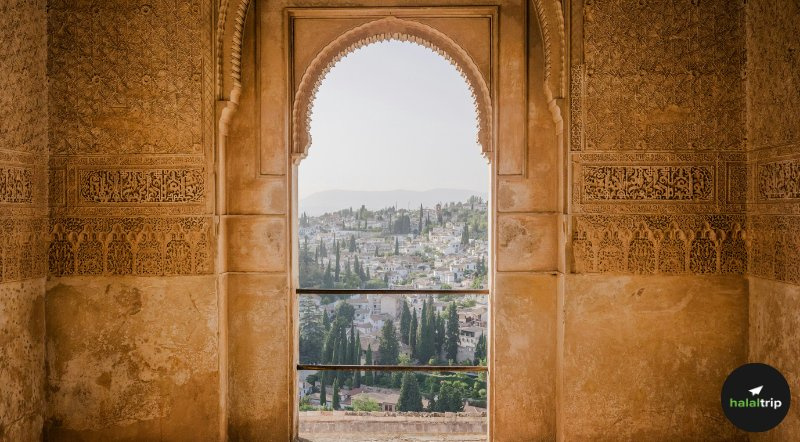
Andalusia is a region that feels like a beautiful whisper from the past. For the Muslim traveler, a journey here is more than just a holiday; it is a profound reconnection with a heritage that once led the world in art, science, and faith. In this article, we will explore the three great Islamic capitals of the past: Cordoba, Granada, and Seville. Together, they form the heart of southern Spain and offer a travel experience that nourishes both the eyes and the soul.
Located at the southernmost tip of the Iberian Peninsula, Andalusia is often regarded as one of the most captivating parts of Spain. Shaped over eight centuries by the history of Al-Andalus, this region is brimming with breathtaking destinations that offer a deep sense of connection to Muslim travelers. From the scent of orange blossoms in the air to the intricate geometric patterns carved into stone, the spirit of Al-Andalus remains vibrant and welcoming.
Once the largest and most sophisticated city in Europe, Cordoba remains a living witness to the glory of the Umayyad Caliphate. The city is a masterpiece of urban design where history is woven into every street. Below are a few must-see places every Muslim traveler should visit while in the city.
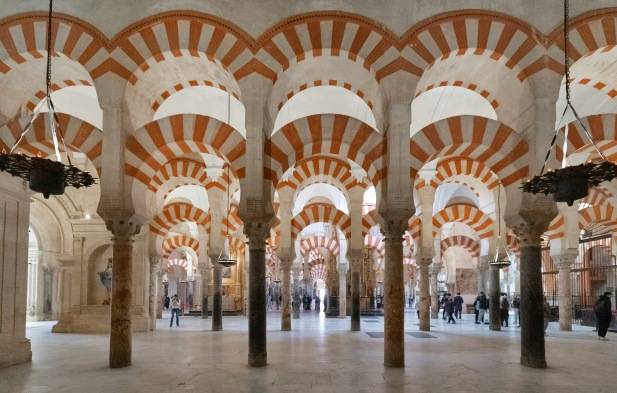
Image Credit: Alexandra Tran on Unsplash
This is the crown jewel of Cordoba. Walking through its "forest of columns" and the iconic red and white arches is a transcendent experience. The Mihrab, with its breathtaking gold mosaics, stands as a reminder of the city's golden age.
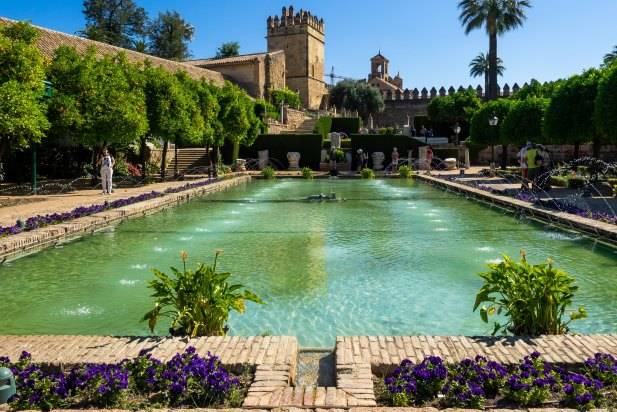
Image Credit: Epicsunwarrior on Wikimedia Commons
Though later transformed, its terraced gardens and water features reflect the classic Islamic style of landscape design, offering a peaceful place for a midday stroll.
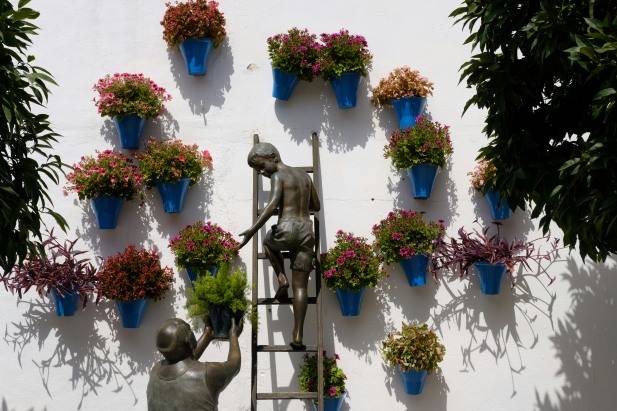
Image Credit: Luís Cardoso on Unsplash
Cordoba is famous for its hidden courtyards. In the historic quarters, you can peek through iron gates to see white-washed walls covered in colorful flower pots, a tradition that emphasizes the beauty of the private home. Put San Basilio Street on your Cordoba itinerary to admire these beautiful flower patios.
Granada is a city of poetry and peaks. Nestled at the foot of the Sierra Nevada mountains, it was the final stronghold of Al-Andalus and remains the most visited city for those seeking Islamic heritage.
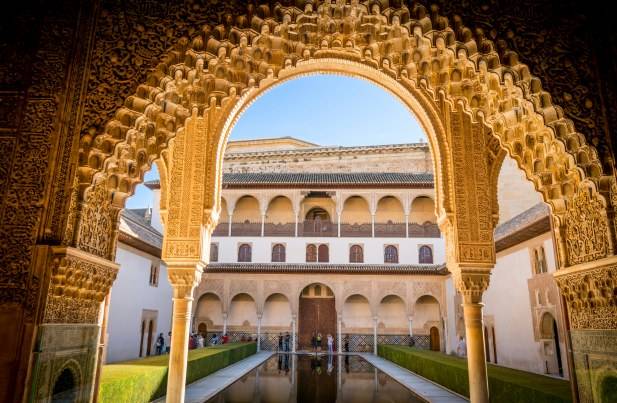
Image Credit: Austin Gardner on Unsplash
This palatial fortress is a testament to the skill of the Nasrid dynasty. Every inch of the Nasrid Palaces is covered in intricate Arabic calligraphy and lace-like stucco. However, do note that it is essential to book your tickets months in advance to secure your entry to this world-class site.
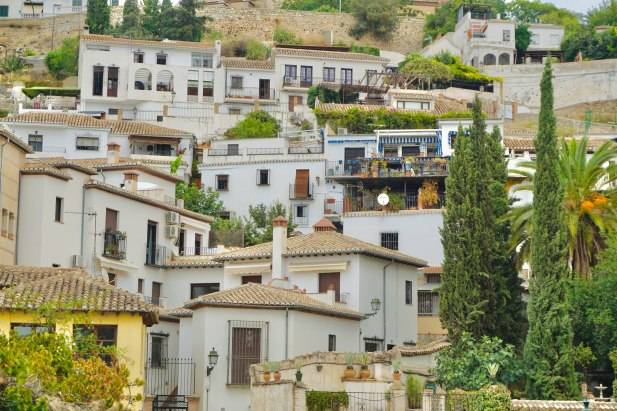
Image Credit: Iffah Suhaili on Unsplash
This ancient neighborhood is a winding labyrinth of narrow streets and white-washed houses. It is a very beautiful neighborhood and remains an important part of the city’s Muslim community today. Walking through its uphill paths feels like stepping back in time.
While in Albaicín, you must visit Mirador de San Nicolas, an iconic viewpoint that offers the most spectacular sunset view of the Alhambra with the mountains in the background.
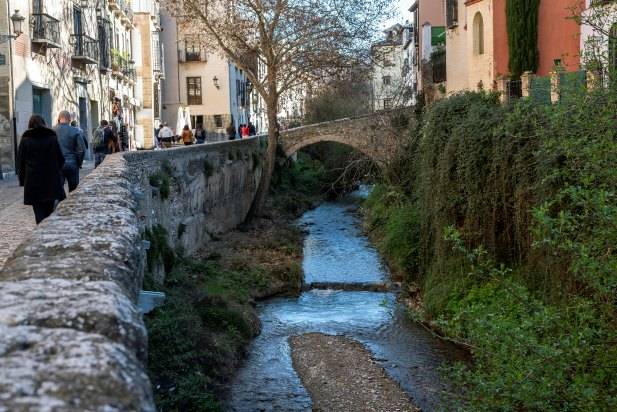
Image Credit: Freepik
Often called the most romantic street in the world, this path follows the Darro river and is brimming with Renaissance palaces and fine shops wherever your eyes see. With its serene atmosphere, the street is perfect for a quiet walk and reflection.
Seville is a city of grand scale and golden light. As a former Almohad capital known as Isbiliyah, it combines the majesty of the past with the energy of a modern Spanish metropolis.
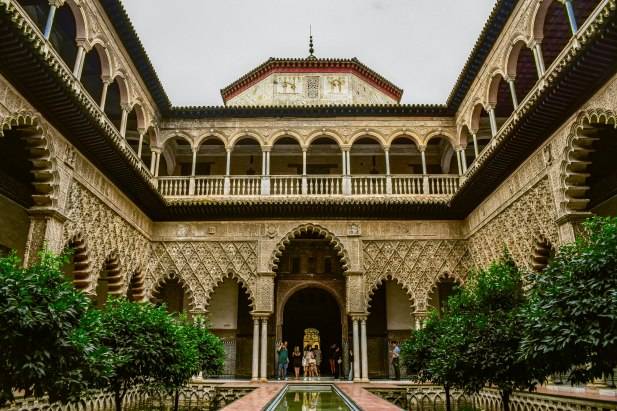
Image Credit: Alex on Unsplash
This royal palace is perhaps the finest example of Mudejar architecture. Its Hall of Ambassadors and sprawling gardens are so well-preserved that they still feel like a royal residence of the past. When visiting this UNESCO World Heritage Site, don’t forget to admire its wooden dome symbolizing the universe.
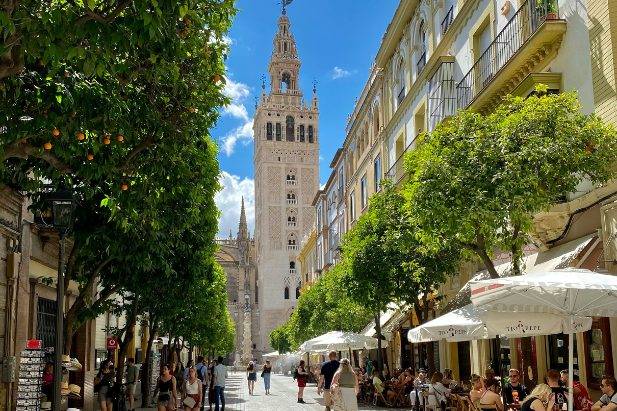
Image Credit: Iván Molina Mas on Unsplash
Originally the minaret of the Great Mosque, this tower is a symbol of Seville. Instead of stairs, it featured 34 ramps so that the Muezzin could ride to the top on horseback to deliver the call to prayer.
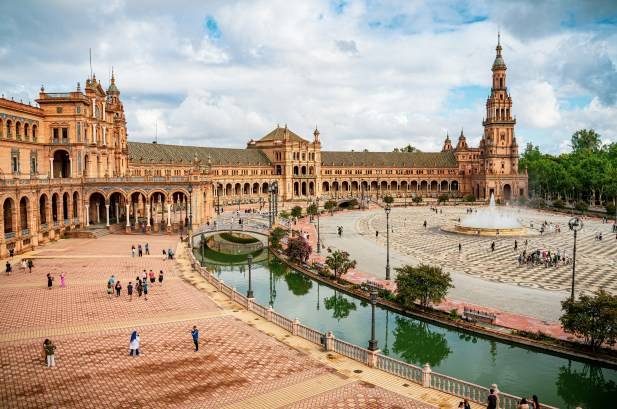
Image Credit: Taisia Karaseva on Unsplash
While built in the early 20th century, this grand square utilizes traditional tiles and arches that pay homage to the region’s historical Moorish aesthetics. With Venetian canals and enchanting fountains, this plaza is one of the most majestic squares in Spain.
With a growing infrastructure of mosques and eateries, Andalusia is incredibly welcoming to Muslim needs! Here are where you could find prayer rooms and Halal restaurants in the golden trio.
While in the city, don’t miss the chance to have your prayer break in The Andalusians Mosque, which is a mosque located inside a recently restored 12th-century building. However, it is not open at all hours, so an alternative is to pray at a musallah in Petra Tearoom, or in Al-Morabito Mosque, which is one of the first modern mosques in the country.
Cordoba has a plentiful list of Halal restaurants that you can try. From Moroccan to Seafood dishes, below are some restaurants you should pay a visit:
Located in the beautiful Albaicín neighborhood, the Mosque of Granada not only offers a quiet space for Muslims to pray, but also a breathtaking view of the Alhambra. However, for those who want to pray while also admiring history, go to At-Taqwa Mosque, which is the first mosque to open in the city after the end of Muslim rule in the 15th century.
To get Halal bites after a tiring day of exploring, these are the spots you should go to:
There are at least two options for Muslim travelers to take their prayer break in Seville. If you happen to be exploring the city center, you can visit the Mosque of Seville Foundation, which was established in 2005 and has been welcoming locals and travelers alike ever since. However, if you want to connect with the local Muslim community, go to Al-Hidaya Mosque, which was the first mosque to open permanently in the city, and is located in the district where many Muslim immigrants live.
Your journey in Seville will not be complete without tasting the local Halal culinary scene, as the city is home to various restaurants of different origins. Here are a few you should consider trying:
A trip through Cordoba, Granada, and Seville is more than just sightseeing; it is a journey of connection. These three cities showcase unmatched architectural beauty, a deep spiritual resonance, and a community warmth that stays with you long after you return home.
Map your Andalusian journey with the Halal Travel Guide to Spain, able to be downloaded on HalalTrip now!


.jpg)