
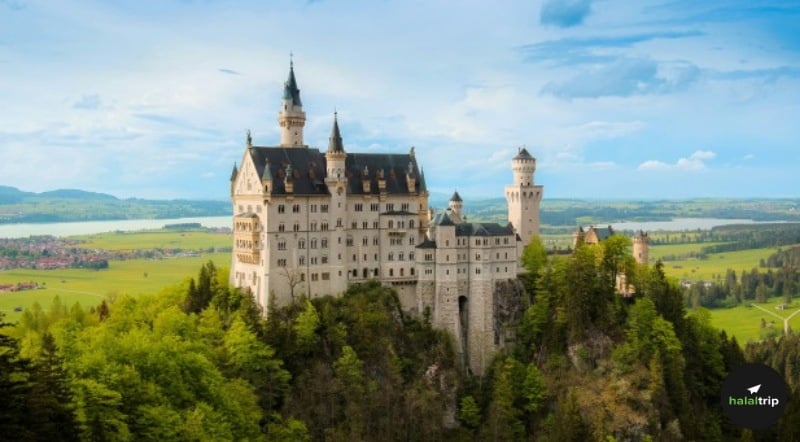
Germany’s castles and palaces are widely renowned for their beauty, resembling those that came straight out of a storybook. Some rise dramatically from forested hills, others sit quietly beside rivers or within landscaped gardens, each shaped by centuries of history and imagination. For Muslim travelers, these fairytale settings can feel a little daunting at first, especially when castles are located outside city centers.
With thoughtful timing and simple planning, however, many of Germany’s most enchanting castles and palaces can be explored comfortably. From royal residences to medieval strongholds, these landmarks combine beauty, culture, and accessible prayer planning that make the journey both inspiring and manageable. Compiled from HalalTrip’s Germany Halal Travel Guide, here are 12 Muslim-friendly castles and palaces to visit–all listed according to their regions for your convenience.
Bavaria is Germany’s largest state. It is often the image people picture when they imagine Germany, with its alpine scenery, grand palaces, and iconic castles. Below are two destinations you can visit!
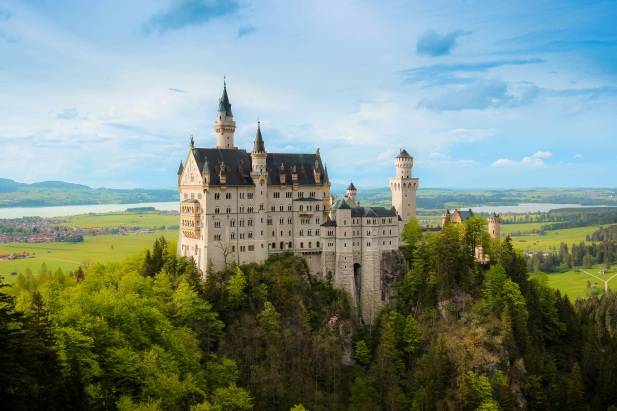
Image Credit: Vinay Chavan on Unsplash
A Germany castle recommendation list wouldn’t be complete without the iconic Neuschwanstein Castle. Set against the Bavarian Alps, this building is one of the most recognizable castles in the world. Its white towers, mountain backdrop, and romantic design have inspired generations of fairytale imagery.
Visits follow a timed ticket system with guided interior tours. There are no prayer facilities on site, so it is best to plan prayers before or after your visit in the nearby town of Füssen, particularly in Füssen Camii or DITIB Moschee Füssen. We recommend you to arrive early to avoid the crowds and wear sturdy shoes as travelers will have to walk uphill to the castle.
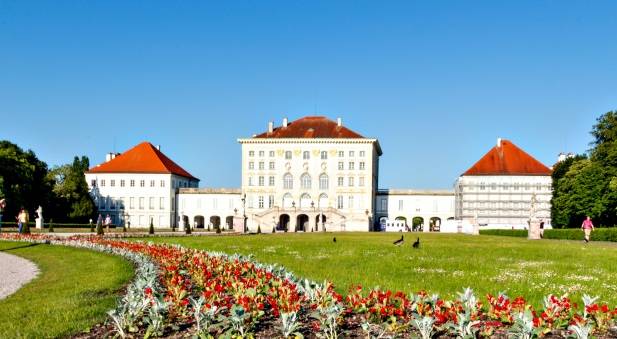
Image Credit: Luis Fernando Felipe Alves on Unsplash
Nymphenburg Palace offers a gentler fairytale experience, focused on elegance rather than drama. Once the summer residence of Bavarian royalty, it is surrounded by wide gardens, canals, and open walkways.
The flat grounds make for a relaxed visit, especially in warmer months. With Munich’s strong public transport network and mosque access, prayer planning here is straightforward. The palace is located only 12 minutes away by car to Islamische Kulturzentrum Hidaje e.V. for your prayer breaks. Its location in a big city also makes it easy for Muslim travelers to enjoy Halal food with many options spread across the city.
Located in southwest Germany and next to Bavaria, this region is known for its beautiful nature, exciting theme parks, as well as romantic ruins and hilltop castles overlooking historic towns.
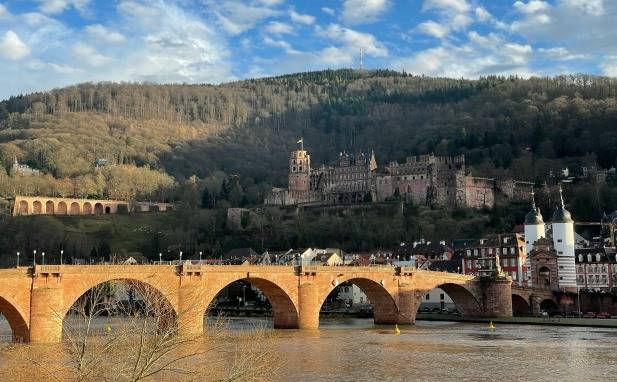
Image Credit: Bernd Dittrich on Unsplash
Perched above Heidelberg’s Old Town, this partially ruined castle is timeless. Its red sandstone walls and its location make it almost seem fairytale-esque, resembling stories like Tangled. On top of the charming Gothic and Renaissance architecture, the castle will give travelers a chance to admire the picturesque views of the Neckar River and the old town.
A funicular connects the Old Town to the castle, making access easier for visitors. Prayer planning works best within Heidelberg city center, where facilities are more readily available.
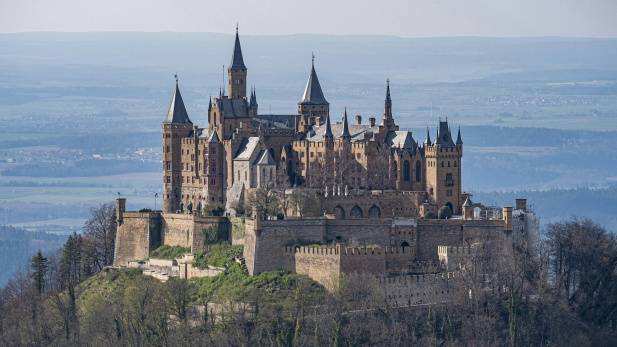
Image Credit: Marvin Langer on Unsplash
Hohenzollern Castle sits high above the surrounding countryside and feels strikingly dramatic. Its position above the clouds on misty days adds to its storybook appeal, especially with views of the Swabian Alps. The castle houses art collections, and occasionally also hosts events such as concerts, exhibitions, and open-air-cinema. See their website to plan when to visit!
Weather here can be cooler and windier than expected, even in warmer seasons. Planning prayers before arriving is recommended, as nearby facilities are limited.
Located in Rhineland-Palatinate, the Rhine and Mosel region is shaped by winding rivers, vineyards, and castles perched along steep slopes. This is a region best enjoyed at a slower pace.
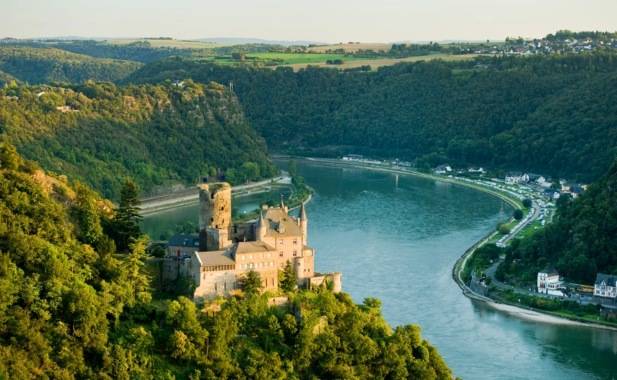
Image Credit: Visit Koblenz Website
A UNESCO-listed cultural landscape, the Upper Middle Rhine Valley is dotted with castles and charming villages overlooking the river below. The experience here is about scenic drives, viewpoints, and river journeys rather than a single stop.
Some areas are within driving distance of Fatih Moschee Bremen, around 15 minutes by car from certain points. Considering its location, we recommend travelers to rent a car to have flexibility in sightseeing and prayer planning.
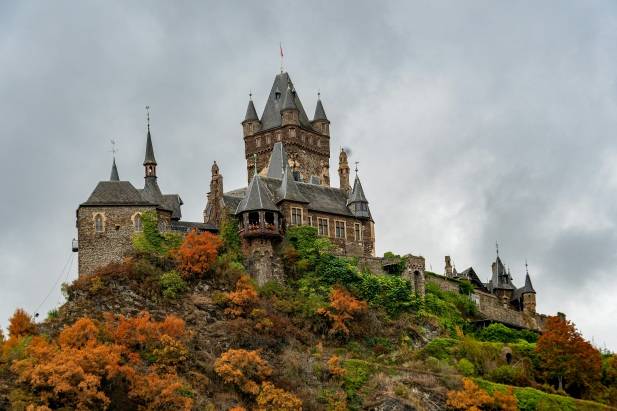
Image Credit: Siegfried Poepperl on Unsplash
Overlooking the Mosel River, Reichsburg Cochem Castle is a majestic medieval fortress. Its towers and hillside setting make it one of the most photogenic castles in western Germany. Join the guided tours to learn about its rich history and imagine yourself pulled back to medieval Germany.
Prayers can be planned at Tahir Moschee Koblenz-Lützel, approximately 43 minutes away by car. Pair this visit with a riverside stop to enrich your experience!
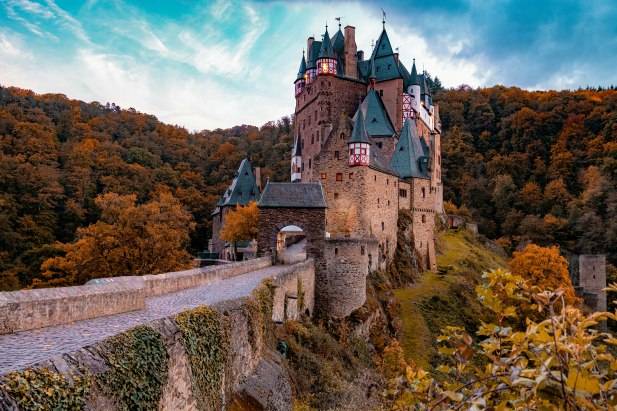
Image Credit: Joshua Kettle on Unsplash
Hidden deep within a forested valley, Eltz Castle is secluded and untouched by time. Reaching it involves a scenic walk, which adds to its fairytale charm and is perfect for nature lovers. If you want an even more immersive setting, visit in the morning to see the castle still covered in fog.
Due to its location, facilities are minimal on-site, so planning is important. Make sure to plan your prayer breaks, in which you can visit Tahir Moschee Koblenz-Lützel, located about 32 minutes away by car.
This state is famously known as one of Europe’s cultural hubs, with its wide offerings from museums, theaters, castles, and more. Here, fairytale palaces are often closer to major cities and easier to combine with urban travel.
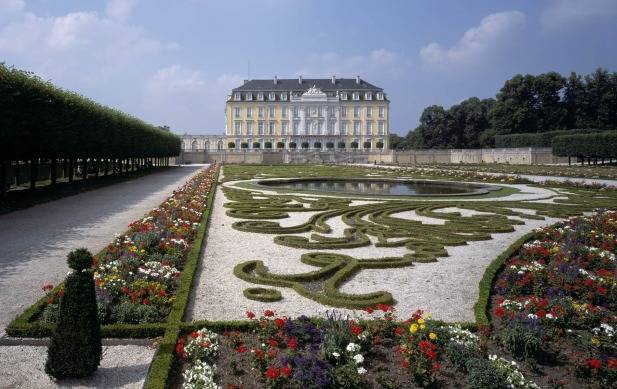
Image Credit: UNESCO Welterbestätten Deutschland Website
Located in Brühl, these twin Rococo palaces are known for refined interiors and symmetrical gardens. Being a UNESCO World Heritage site, this destination is a must-visit for every traveler. The flat grounds would also make them easy to explore at a relaxed pace.
For Muslim travelers, prayer planning is convenient with Moschee Wesseling located just 9 minutes away by car, making this a comfortable stop for families.
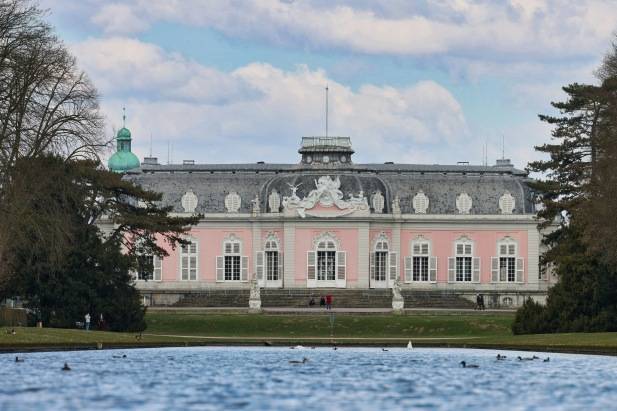
Image Credit: Andreas Schmidt on Unsplash
With its soft pink facade and tranquil gardens, Schloss Benrath is a charming stop for everyone who has ever dreamed of living in a pink palace. The park surrounding the castle also includes the Museum of Garden Art, which shows travelers the history of European garden designs.
Its location in Düsseldorf makes Schloss Benrath easily accessible for Muslim travelers, with DITIB Zentralmoschee Düsseldorf located only 10 minutes away for your prayer breaks and ample choices of Halal foods throughout the city.
Located next to each other, Berlin (located in Brandenburg) and Saxony are regions in eastern Germany known for being cosmopolitan hubs with rich cultural heritage and stunning architecture. In these regions, royal palaces blend naturally into cultural cityscapes.
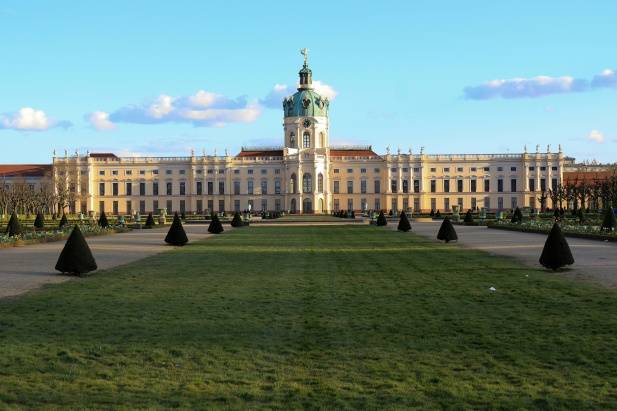
Image Credit: Goke Obasa on Unsplash
Berlin’s largest surviving palace reflects the elegance of Hohenzollern dynasty’s royal life. Its beautiful gardens, art collections, baroque architecture, and spacious interiors make it one of the city’s highlights.
Prayer planning is simple with the Ensar Mosque located just 5 minutes away and many other mosques scattered across the big city. Searching for Halal food is just as easy, with many Halal restaurants offering diverse cuisines.
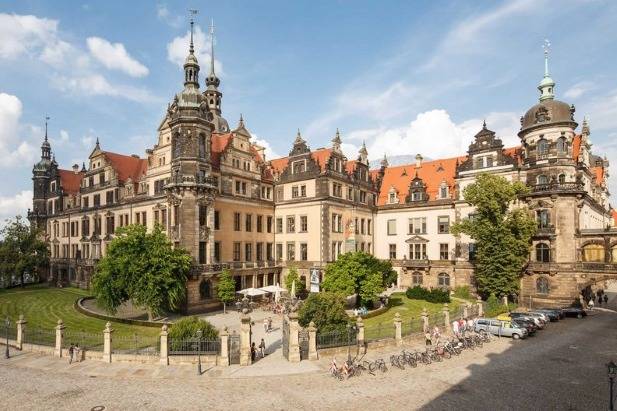
Image Credit: Staatliche Kunstsammlungen Dresden
Situated in Dresden’s Old Town, Residenzschloss showcases centuries of royal history through restored halls and museum spaces. Once the home to the royals, this building is now the heart of the city’s art collections.
Nearby, the Marwa El-Sherbiny Zentrum supports comfortable prayer planning while exploring the area. There are also numerous Halal restaurants that Muslim travelers can enjoy, serving international and Middle Eastern dishes.
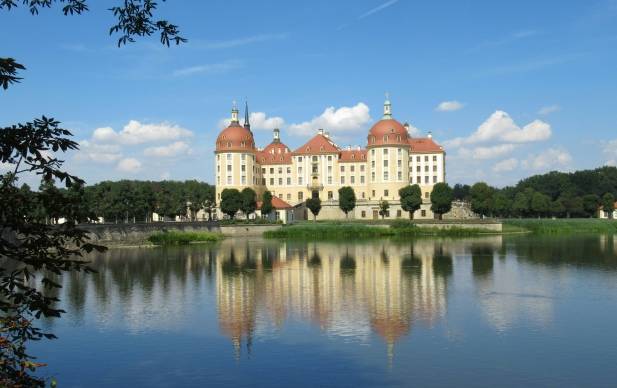
Image Credit: Desiré Kranenburg on Unsplash
Set on an artificial island amid ponds and forests, Moritzburg Castle was once the hunting lodge of Augustus the Strong. The castle now houses Europe’s largest collection of hunting trophies. To add magic to your experience, visit during autumn or winter, when the reflections would ripple across the surrounding water.
Prayers can be planned at the nearby Islamic Center of Dresden, and lunch breaks can also be taken at a leisurely pace with Dresden’s wide offerings of Halal restaurants.
Germany’s castles and palaces invite travelers into worlds shaped by history, artistry, and imagination. For Muslim travelers, these fairytale experiences are very much within reach with mindful planning around transport and prayer.
By choosing regions thoughtfully and allowing time to explore at a comfortable pace, you can experience Germany’s most enchanting landmarks with ease and confidence.
Discover more fairytale locations and realize your imagination now with HalalTrip's Germany Halal Travel Guide!

