
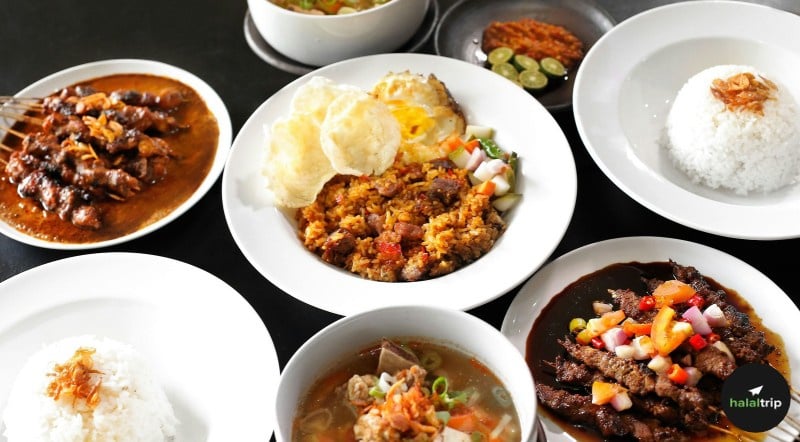
Image Credit: Haryo Setyadi on Unsplash
As the world’s most populous Muslim nation, Indonesia has long been considered one of the easiest destinations on the planet for Muslim travelers to navigate, and is also one of the most enjoyable destinations for Muslim foodies for its diverse and flavorful dishes. Yet over recent months, global headlines surrounding Indonesia’s mandatory Halal certification law have sparked questions among international visitors.
Travelers wonder whether their favorite street corner stalls are changing, whether supermarket snacks require new scrutiny, and what the phased regulations mean for their upcoming vacations.
The short answer is reassuring. Far from limiting your culinary adventures, Indonesia’s national Halal framework is designed to give consumers clarity so travelers can explore night markets, cafes, and restaurants with peace of mind.
To understand the changes, it helps to look at the legal framework governing the rollout. The transition is regulated by Law Number 33 of 2014 concerning Halal Product Assurance, recently reinforced and clarified by Government Regulation Number 42 of 2024. The entire system is administered by the Halal Product Assurance Organizing Body, widely known by its Indonesian acronym, BPJPH, operating under the Ministry of Religious Affairs. Under this mandate, products entering, circulating, and traded throughout Indonesia must be certified Halal, unless they clearly contain non-Halal ingredients.
Rather than enforcing an abrupt overnight shift across millions of small businesses, the government introduced a phased timeline. The first phase focused on large and medium scale food and beverage manufacturers, commercial slaughterhouses, and established restaurant franchises.
For micro and small enterprises, known locally as UMKM, as well as imported food and consumer goods, authorities extended the implementation runway until October 2026. This realistic buffer allows family-run businesses and homely food producers the necessary time to certify their supply chains without disrupting the daily food economy.
Crucially, the law does not ban non-Halal food. Pork dishes, alcoholic beverages, and traditional regional specialties containing non-Halal ingredients remain legal, but they must display transparency by clearly disclosing their ingredients and providing prominent warning labels.
For visiting Muslim travelers, this rule provides an essential layer of protection, ensuring that non-Halal items can never be inadvertently confused with Halal offerings.
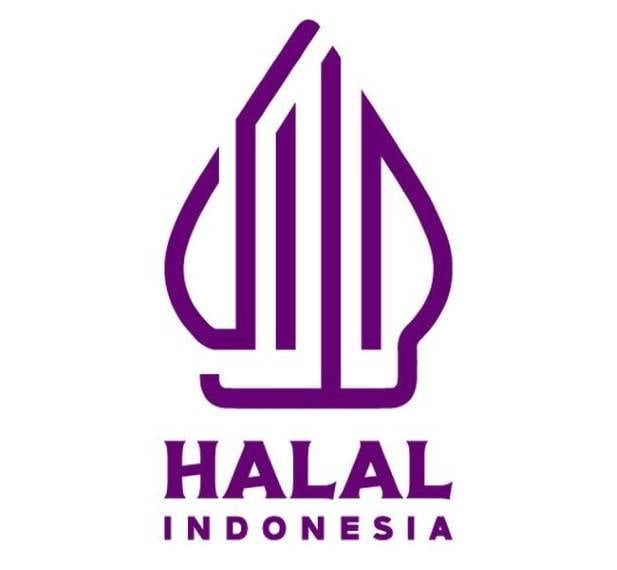
Until a few years ago, packaged goods in Indonesia carried the familiar green circular emblem issued by the Indonesian Ulema Council, known as MUI. Today, you will see the national Halal Indonesia logo, designed by BPJPH.
The new mark is rendered in a regal shade of purple, featuring an upright silhouette that evokes the gunungan, the iconic mountain shape that opens and closes traditional Javanese shadow puppet performances. Within the shape, stylized calligraphy spells out the word Halal, resting above bold purple lettering that reads Halal Indonesia.
Whether you step into an Indomaret, an Alfamart, or a high-end supermarket in central Jakarta, this purple mark is everywhere. You will spot it instantly on bags of cassava crisps, packages of Indomie, local chocolate bars, bottles of ready to drink jasmine tea, and dairy cartons. Seeing that distinctive purple emblem on the wrapper guarantees that the product has undergone rigorous ingredient auditing and production verification.
When it comes to prepared food, your dining experience in Indonesia will generally fall into two broad settings: formal restaurants and street side eateries.
If you are dining inside shopping malls, lifestyle districts, or international hotel corridors in major hubs like Jakarta, Surabaya, and Bandung, the vast majority of food chains, ramen parlors, bakeries, and coffee houses already hold official BPJPH certification.
Restaurants routinely frame their certificates right beside the front reception counter or print the purple logo on their physical and digital menus. If you do not see a certificate displayed, a polite inquiry to your server will confirm their kitchen status.
Then comes the real soul of Indonesian food culture: the roadside warung and the wooden night market food cart known as kaki lima. Because small vendors have until October 2026 to complete their administrative paperwork, your favorite street vendor might not yet possess a laminated government certificate.
Does this mean you need to avoid street food? Absolutely not.
Across Muslim majority regions of Indonesia, local vendors are almost invariably practicing Halal cooking for their fellow Muslim neighbors. The meats they purchase from local wet markets come from certified suppliers, and the base ingredients for staples like soto betawi, nasi goreng, gado gado, and chicken satay are naturally free from non-halal ingredients.
If you ever feel uncertain, a warm and polite question goes a long way. Simply asking the cook, Apakah ini Halal?, will be received with warmth, honesty, and clarification.
Indonesia is a massive nation spanning over seventeen thousand islands, each with its own cultural, ethnic, and culinary identity. Knowing where you are traveling helps shape your dining radar.
On the islands of Java, Lombok, and across West Sumatra, the default dining reality is Muslim-friendly. In cities like Padang or Bukittinggi, the entire concept of dining revolves around Minangkabau cuisine, where dishes like slow-braised beef rendang and gulai ayam are deeply intertwined with Islamic tradition. In these regions, finding non-Halal food requires active searching.
On culturally distinct islands like Bali, where the majority population practices Balinese Hinduism, pork is a celebrated culinary staple. Specialties like babi guling, featuring spit roasted whole suckling pig, are served in dedicated open front restaurants across the island.
Here, the new labeling regulations are especially helpful for Muslim travelers. Rather than guessing whether a generic restaurant uses pork fat or lard, the presence of explicit labeling and the visibility of the purple Halal emblem on dedicated Muslim-friendly establishments make separating safe choices simple and stress-free.
Beyond food, traveling in Indonesia offers an ease of worship that few other places can match. Dedicated prayer rooms, known as musholla, are a standard feature of daily life. You will find clean, air conditioned prayer rooms equipped with ablution areas in every major shopping center, railway station, airport terminal, and highway rest stop.
When the rhythmic call to prayer echoes across the city, you are never more than a short stroll from neighborhood mosques or monumental landmarks like the Istiqlal Mosque in Jakarta and the Al-Akbar Mosque in Surabaya.
At its core, Indonesia’s Halal mandate is an ambitious national effort to guarantee honesty, hygiene, and clarity across the entire food supply chain.
Whether you are enjoying a quick cup of iced tea picked up from a corner minimart, savoring a late night plate of satay beside a smoky street cart, or sitting down to a refined banquet in a modern hotel, the new regulations simply let you focus on what matters most: enjoying every single bite of one of the world’s greatest culinary landscapes.

