
Step into any bustling morning market or modern airport terminal, and you will find travelers reaching for the exact same comforts: a warm pastry wrapped in flaky dough, a soft pocket bread stuffed with savory fillings, or a handful of dried fruits and nuts to sustain them on the move. While we often view these items as modern convenience foods, they actually carry thousands of years old heritage. The massive merchant networks and historical trade routes that stretched from Cordoba to Samarkand functioned as the world's first food highways. As mobile Muslim merchants, pilgrims, and scholars traversed vast continents, they did not just transport silks and spices; they pioneered a global snack menu designed specifically for life on the move.
This timeless tradition of charting new paths across the earth while enjoying the gifts of sustenance mirrors a beautiful reflection found within the Holy Quran, which reminds us of the spiritual purpose embedded within our journeys:
“It is He who made the earth tame for you – so walk among its slopes and eat of His provision – and to Him is the resurrection.” (Al Mulk 67:15)
By looking back at the clever culinary innovations of these early travelers, we discover how the practical needs of the historic road shaped the global comfort foods we still love today.
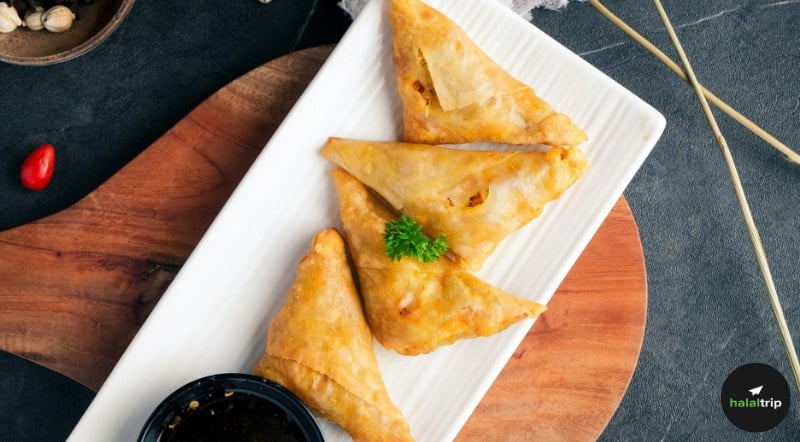
Long before it became the golden fried street food favorite enjoyed across South Asia and the Middle East, the humble samosa began its journey as a travel snack. In early Arabic and Persian culinary texts dating back to the tenth century, this beloved pastry was documented under the name sanbusak or sambusa.
The design of the original sanbusak was a triumph of ancient food engineering. Merchants preparing for months of grueling travel needed a way to carry meat without it spoiling instantly in the intense desert heat. The solution was to wrap spiced minced meat in a thickly folded wheat dough, creating a sturdy crescent shaped pocket. When baked over open fires or inside clay ovens, this durable crust acted as a protective shield, keeping the filling safe from dust and wind of caravan trails. As these mobile networks expanded eastward toward Delhi and westward across North Africa, the pastry adapted to the local pantries it encountered, incorporating regional spices like cumin, coriander, and potatoes, eventually evolving into the universal comfort staple we recognize today.
To fully appreciate how these foods brought people together, one must imagine the atmospheric reality of the ancient caravanserai. These historic roadside inns, spaced precisely one day travel distance apart along the major trade routes, served as vital space where weary merchants, multilingual pilgrims, and nomadic herders gathered together at sunset.
At the center of these evening gatherings was the magic of flatbreads like khubz. In the advanced baking hubs of Islamic Spain, including the grand city of Cordoba, master bakers perfected the art of creating pocketed flatbreads that could remain soft and edible for days on the road. When the caravans halted for the evening, these flatbreads served as a source of hearty nourishment and at once an edible utensil. In an era where carrying fragile metal silverware across rugged mountain passes was impractical, merchants used pieces of fresh khubz to scoop up stews and dips directly from shared platters. This simple, delicious practice transformed dinner into an experience of shared community, breaking down cultural barriers through the simple act of sharing bread.
Crossing the brutal desert plains or scaling the freezing mountains toward the trading markets of Samarkand required a very specific kind of fuel. Merchants needed lightweight, nutrient dense sustenance that would not spoil over weeks of exposure to extreme weather elements. This challenge led to incredible agricultural and preservation breakthroughs across early Islamic lands.
Early food producers perfected the art of drying and naturally preserving native fruits, creating shelf-stable powerhouses out of dates, figs, apricots, and raisins. When combined with roasted walnuts or sugared almonds, these sweet mixtures became the first iteration of the modern energy bar. Known across various historic regions as nutrag or portable trail mixes, these dense snacks were prized because they could be packed tightly into leather saddlebags without losing their nutritional value. For a weary traveler resting under the vast desert stars, a simple handful of these preserved fruits provided a burst of energy, sustaining them through the most demanding days of their journeys.
When we reflect on the incredible historical trajectories of the samosa, the pocket bread, and the trail mix, we see that our modern plates are shaped by a shared legacy of movement, hospitality, and resourcefulness. Every single time we enjoy a quick snack on a modern road trip or a long flight, we are participating in a beautiful culinary tradition pioneered by early explorers who crossed the globe centuries ago.

