
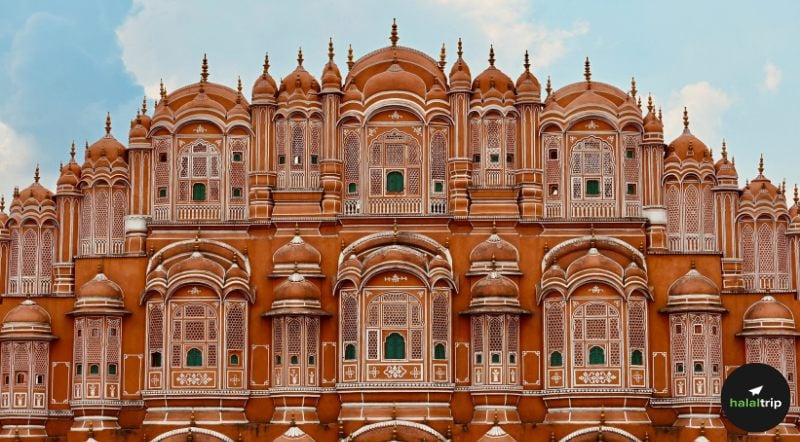
There are cities that charm you with subtle details, and then there is Jaipur, a destination that sweeps you into a rose-colored dream the second you pass through its historic gates. Located in the heart of Rajasthan, Jaipur is celebrated across the world as the Pink City. Every arched gateway, every ornate palace facade, and every winding market street glows with an earthy terracotta pink hue that feels straight out of an illustrated fairytale.
For aesthetic lovers, photographers, and travelers who cherish vibrant visual beauty, Jaipur offers an unforgettable escape. Even better, beneath its majestic royal architecture lies a deeply welcoming cultural haven for Muslim travelers, complete with historic sixteenth century mosques, lively traditional bazaars, and mouthwatering feasts of slow-cooked Mughlai cuisine.
The rosy identity of Jaipur has its own history. In 1876, Maharaja Sawai Ram Singh prepared to welcome the Prince of Wales and Queen Victoria to the royal state. In local tradition, terracotta pink represents warm hospitality and gracious welcome. To honor his guests, the Maharaja ordered the entire walled city painted in this shade.
The visiting royals were so captivated by the sight that the nickname stuck. To keep this vibrant identity alive, the royal administration passed a law making it mandatory for all buildings and shops within the historic quarter to maintain their pink facade. Today, centuries later, walking down the broad avenues of the old quarter still feels like strolling through an open air palace washed in rosy light.
Jaipur’s skyline is a breathtaking celebration of architectural harmony, where intricate Rajput craftsmanship meets majestic Mughal proportions.
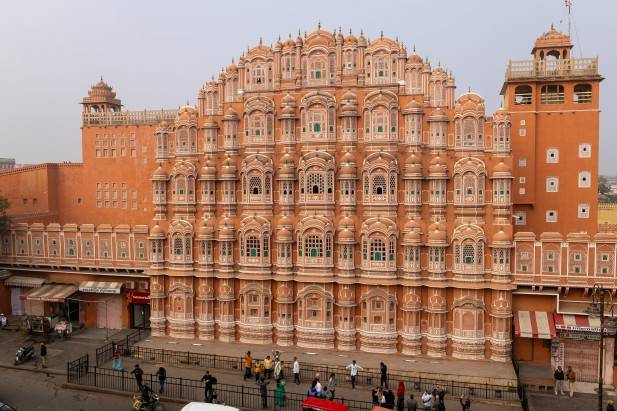
Image Credit: Martijn Vonk on Unsplash
Start your morning at Hawa Mahal, or the Palace of Winds. Built in 1799 from pink and red sandstone, this five-story monument resembles the crown of Lord Krishna. Its exterior features 953 delicately carved latticework windows called jharokhas. These windows allowed royal ladies to observe vibrant street processions and bustling daily life without stepping into public view, while funneling cool breezes through the interior chambers.
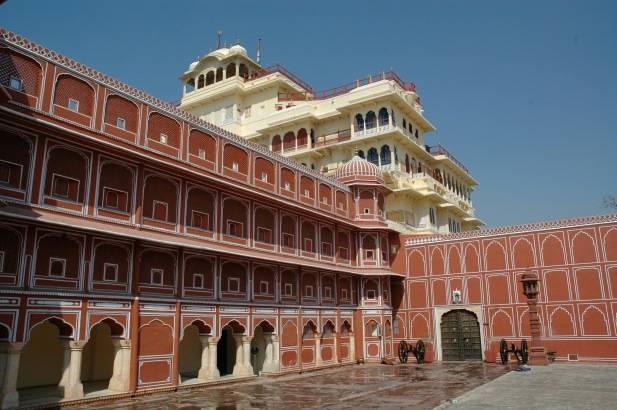
Image Credit: Danielle Barnes on Unsplash
A short walk away lies the City Palace, a vast complex of courtyards, landscaped gardens, and royal pavilions. Don't miss the famous Peacock Gate in the inner courtyard, renowned for its vivid mosaic colors and exquisite carved detail.
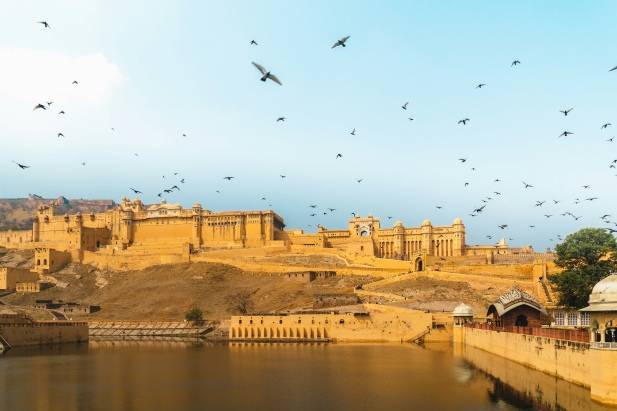
Image Credit: Meriç Dağlı on Unsplash
For a grand journey into royal history, journey north to Amer Fort. Perched dramatically along the rugged Aravalli hills overlooking Maota Lake, this massive sandstone fortress features sweeping ramparts, grand assembly halls, and the mesmerizing Sheesh Mahal, where thousands of convex mirror tiles catch the flickering light like stars in a night sky.
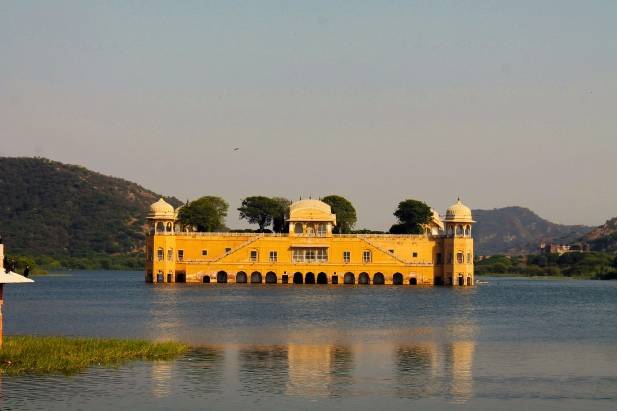
Image Credit: Vedant Agrawal on Unsplash
Before sunset, make two essential stops. Pause along the serene shores of Man Sagar Lake to view Jal Mahal, the Water Palace, which appears to float weightlessly on the calm waters against the surrounding mountains.
Later, head to Patrika Gate at Jawahar Circle, a modern architectural triumph featuring pastel pink archways, hand-painted ceilings, and symmetrical corridors that pay vibrant tribute to Rajasthani arts and heritage.
No journey to Jaipur is complete without diving into the bustling energy of its historic bazaars, tucked beneath continuous rows of pink porticoes.
Head straight to Johari Bazaar if you love fine craft and jewelry. Jaipur is a world-renowned hub for gemstone cutting and traditional Kundan and Meenakari jewelry, where skilled artisans set precious stones into gold and silver with techniques passed down through generations.
If your heart belongs to textiles, Bapu Bazaar is an absolute treasure trove. Here, you will find authentic Rajasthani cotton fabrics, breezy bandhani and leheriya tie dye dupattas, hand embroidered saris, and featherlight Jaipuri razai quilts. Make sure to pick up a pair of handcrafted camel leather jootis, beautifully embroidered slip on shoes available in every color of the rainbow.
Traveling through Jaipur as a Muslim visitor is easy and comforting, thanks to the city’s rich Islamic history and active faith communities. When it is time for daily prayers, you will find prayer spaces close to major sights. Just below the heights of Amer sits the historic Jama Masjid, also known as the Akbari Mosque. Commissioned in the sixteenth century by the Mughal Emperor Akbar, this serene stone mosque offers expansive open courtyards and shaded prayer arches where travelers have paused for reflection across centuries.
Within the old city and the traditional craft quarters, you can also visit Kagzi Jama Masjid in Sanganer, an area historically renowned for its handmade paper artisans. The mosque welcomes visitors warmly for daily congregational prayers and Friday Jumu'ah, offering a peaceful pause in your day.
Rajasthan’s royal history is matched by its legendary culinary traditions, offering plenty of satisfying Halal dining options. For an authentic local experience, head to Muhammadi Palace in Ramganj Bazaar near the old city. This beloved establishment is famous for its rich Mughlai recipes, serving slow cooked mutton rogan josh, fragrant korma, pepper spiced chicken fry, and steaming tandoori rotis pulled straight from the clay oven.
If you are traveling with family and seeking a comfortable dining room, make your way to Hakkeem’s Restaurant near Panch Batti on MI Road. Renowned for its generous hospitality, Hakkeem’s serves tender charcoal grilled chicken tikka, rich butter chicken, and fragrant mutton biryani infused with saffron and warm whole spices. Pair your meal with a cool, creamy glass of sweet lassi to complete your royal feast.
Jaipur is a city that captures your imagination through its vibrant color, deep history, and warm hospitality. From the delicate latticework of Hawa Mahal and the sweeping ramparts of Amer Fort to the aromatic kitchens of historic bazaars, the Pink City offers a journey filled with wonder, comfort, and shared cultural heritage.

