
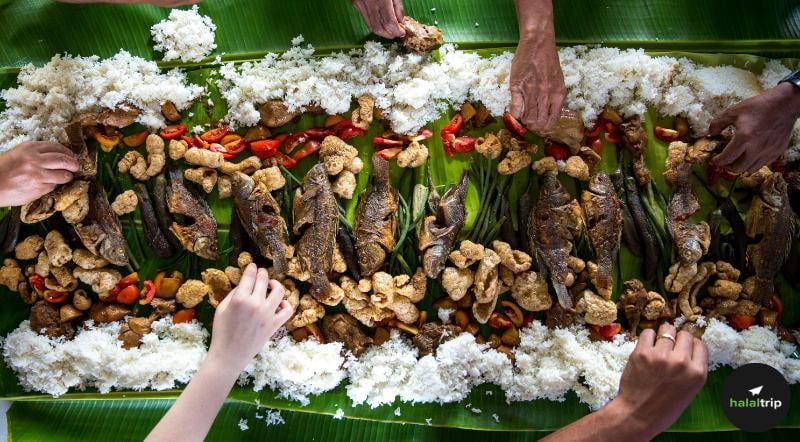
For Muslim travelers, the search for Halal options is often a primary concern when visiting a new country. However, in the Philippines, visitors can rest assured as this search is frequently replaced by a sense of cultural inevitability.
Beyond merely accommodating dietary needs, the archipelago is actually structurally and historically oriented toward them. Between the vast resources of the ocean and a deep-rooted tradition of hospitality, finding a permissible and delicious meal is less about navigating obstacles and more about accepting an invitation.
With 7,641 islands, the Philippines is defined by its relationship with the sea. This geography provides a natural advantage for Muslim visitors, as fresh seafood is the national cultural protein.
From the vibrant wet markets known as palengkes to beachside grills, the default meal often revolves around fish, squid, and shellfish. Traditional preparation methods like inihaw, or charcoal grilling, allow the natural flavors of the catch to shine without the need for complex additives, making the country’s street food and high-end dining equally accessible.
To truly understand the Halal landscape of the Philippines, one must look to the traditional kitchens of the south, where centuries of Islamic heritage have perfected a unique spice profile.
A rich, aromatic stew that exemplifies the intersection of local and Arab culinary traditions. The dish features tender beef braised in a thick sauce of coconut milk, peanuts, and a blend of traditional spices.
This is the Tausug people’s specialty, featuring chicken braised in a unique paste of blackened coconut meat. The coconut is charred to achieve a deep, smoky flavor, which is then balanced with lemongrass, ginger, and turmeric.
A popular breakfast staple consisting of small skewers of grilled beef or chicken served with ta'mu, or hanging rice. It is defined by a thick, spicy, and slightly sweet red sauce that serves as a vibrant introduction to quick, accessible Halal options.
Made from toasted coconut, ginger, and bird’s eye chili, this is a versatile condiment that provides a fragrant, spicy kick; elevating everything from simple grilled fish to complex stews.
The ease of dining in the Philippines is also a reflection of Bayanihan, the cultural spirit of communal unity. In Filipino culture, hospitality is not a performance but a structural value; when a guest expresses a dietary requirement, the response is typically one of immediate and genuine accommodation.
This spirit, combined with the emergence of dedicated Halal corridors in urban centers like Manila, Cebu, and Davao, ensures that the traveler never feels like a guest to be managed, but rather a person who simply belongs at the table.
Ultimately, a trip through the Philippines is defined as much by what is on the plate as the landscape outside the window. When travelers sit down to a meal, they are participating in a 700 year legacy of trade, faith, and shared values. It is an experience that reminds us that the best way to understand a country is through its flavors, and in the Philippines, those flavors always tell a story of welcome.

