
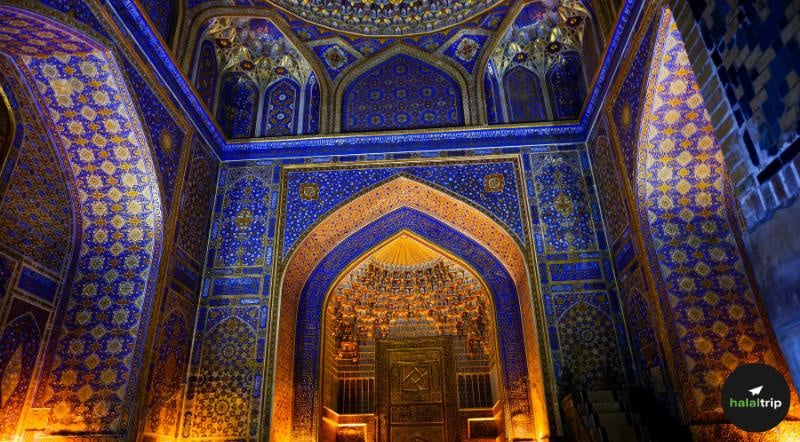
The month of Ramadan is often a time of inner reflection, but it can also be a season of travel and outer discovery. As we fast and pray, we are part of a global tapestry woven over fourteen centuries, stretching from the desert sands of the Hijaz to the marble palaces of India. For the traveler seeking more than just a destination, let us guide you into a unique opportunity to walk through the living history of the civilizations that shaped our world.
By visiting the epicenters of the greatest Islamic empires, we don't just see monuments; we witness how the spirit of the Ummah has adapted, flourished, and endured across different climates and cultures. From the birthplace of the faith to the jewels of the Silk Road, here is your guide to a heritage-led Ramadan journey through time.
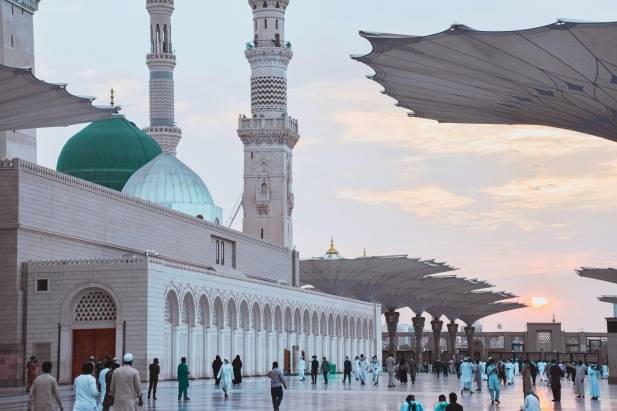
Photo of Masjid An-Nabawi in Medina | Image Credit: Haidan on Unsplash
Every story has a beginning, and for the Muslim world, it is the sacred cities of Mecca and Medina. This is the heart of the Rashidun (Rightly Guided) era, where the foundations of the faith were laid.
During this time of Ramadan 2026, the cool winter breeze makes the outdoor courtyards of the Masjid an-Nabawi particularly serene. Breaking your fast in the Haram is a masterclass in humility and unity, as thousands of strangers become a single family over a shared plastic sheet of dates, yogurt, and bread.
Beyond the mosques, do plan a visit to Mount Uhud or the Quba Mosque to feel the tangible presence of the earliest days of Islam.
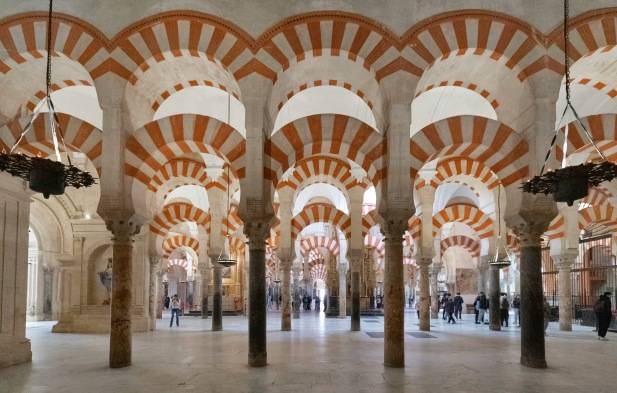
Photo of Mosque-Cathedral in Cordoba | Image Credit: Jordi Vich Navarro on Unsplash
As the first major dynasty to expand Islamic influence, the Umayyads brought a distinct aesthetic of arches and courtyards to the world. In various parts of Southern Spain, the spirit of Al-Andalus still lives quietly. It still lives in the white and red arches of the Mosque-Cathedral in Cordoba, in the intricate carvings of the Alhambra in Granada, or in the beauty of the Real Alcázar in Seville.
Besides the three golden cities, there are many parts of Spain where you can track the legacy and admire the beauty of Al-Andalus. Experiencing Ramadan here is an eye-opening journey, a “slow-travel” where it reminds you that the greatness of Islam once reached the European peninsula.
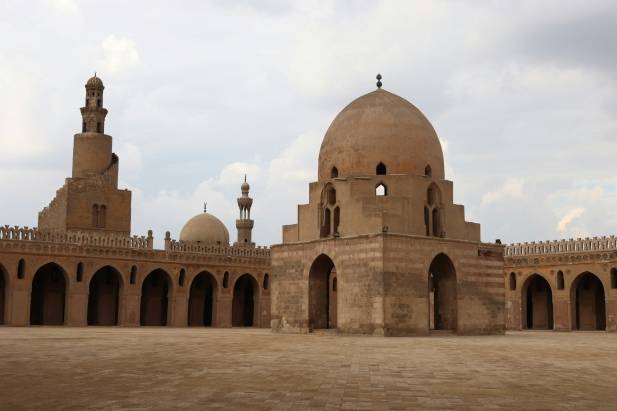
Image Credit: Sa Osir on Unsplash
While Baghdad was the Abbasid heart, Cairo became the long-standing guardian of their scholarly tradition. Experiencing the grandeur of Abbasid-style heritage sites, such as the Mosque of Ahmad ibn Tulun, will be a completely elevated journey during the Ramadan.
At night, the area around Al-Azhar comes alive with "Mawaid al-Rahman" (charity tables), embodying the Abbasid spirit of communal care and intellectual pursuit. Exploring the historic libraries and madrasas of Cairo will connect you to the Golden Age of Islamic science and philosophy.
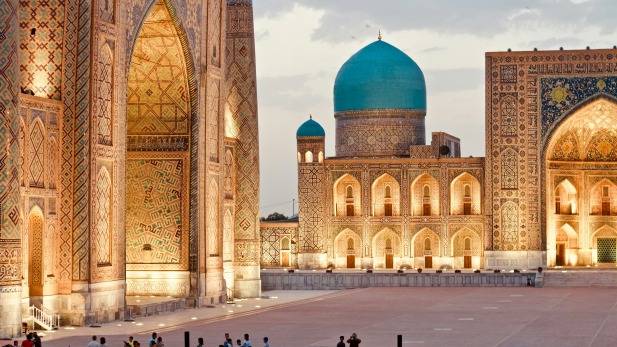
Image Credit: Ozodbek Erkinov on Unsplash
Under the Timurids, Central Asia became a turquoise-domed dreamscape. This was a renaissance of art and astronomy that influenced the world for centuries, turning the desert into a hub of intellectual and spiritual brilliance.
In Samarkand, the legendary Registan Square glows with a golden hue at sunset. During Ramadan, you can experience the local tradition of “Iftar in a Mahalla” (neighborhood), where people would share Ploc and green tea in the courtyard of a traditional home. Also, don't miss the Shah-i-Zinda necropolis, a street of blue-tiled mausoleums that feels like stepping into a hand-painted manuscript.
If Samarkand is for the eyes, Bukhara is for the soul. This city is a living museum with over 2,000 years of history. Spend your Ramadan evenings at the Po-i-Kalyan complex, where the massive mosque and the iconic Kalyan Minaret provide a breathtaking backdrop for Tarawih prayers. Travelers can also visit the city’s ancient "Trading Domes" that still bustle with life, offering a Sahur experience that feels like stepping back into the days of the camel caravans.
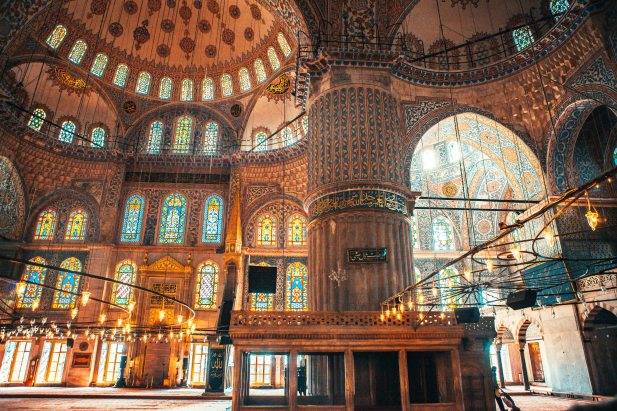
Image Credit: Raimond Klavins on Unsplash
For centuries, the Ottomans were the guardians of the Holy Cities and the bridge between East and West. The city during Ramadan is arguably the most festive in the world. The "Mahya" lights hanging between the minarets of the Blue Mosque spell out messages of peace, and the sound of the cannon at Sultanahmet Square signals a city-wide celebration of Iftar.
Besides visiting the iconic Blue Mosque, don’t forget to explore the Topkapi Palace to see the Sacred Relics, connecting the Ottoman sultans back to the Rashidun era.
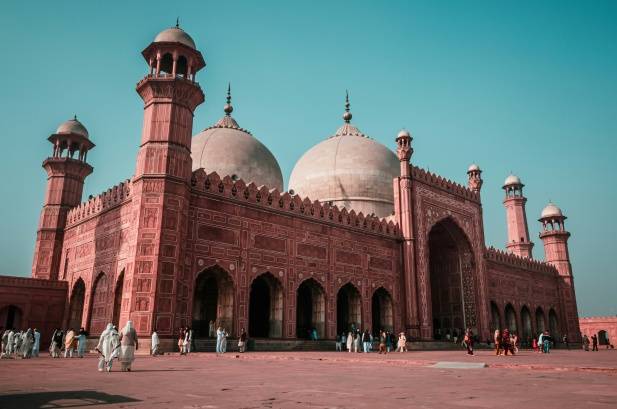
Photo of the Badshahi Mosque in Lahore | Image Credit: Dr Muhammad Amer on Unsplash
The Mughals synthesized Persian, Indian, and Islamic styles into an architecture of pure, floral elegance, creating a "Garden of Islam" across the subcontinent.
Delhi was the majestic capital of the Mughal Empire. To witness the living legacies, visit the Jama Masjid and the surrounding lanes of Old Delhi (Shahjahanabad). During Ramadan, the mosque’s courtyard fills with thousands of worshippers for Iftar, and the old lane transforms into a legendary food trail where you can break your fast with Nalli Nihari and Shahi Tukda amidst the historic Mughal gates.
Lahore was the city of gardens and grace. Here, the Badshahi Mosque stands as one of the world’s most beautiful congregational spaces, its red sandstone glowing under the moonlight. The pre-dawn Sahur in the Fort Road Food Street behind the mosque is a vibrant explosion of spices and community spirit, with the illuminated Lahore Fort towering in the background.
Whether you are wandering through the Shalimar Gardens or the Red Fort, the Mughal obsession with symmetry, water, and nature remains a testament to their vision of a "paradise on earth."
As we journey from the cool springs of Uzbekistan to the bustling streets of Lahore, we realize that while the empires have risen and fallen, the spirit of the month remains unchanged. Ramadan is the thread that connects the red sandstone of the Mughals to the blue tiles of the Timurids and the ancient stones of the Hijaz.
To travel through these civilizations in Ramadan is to realize that we are not just visiting "sites"—we are visiting our own history. It is a reminder that no matter where we are in the world, the call to prayer sounds the same, the date tastes as sweet, and the heart finds the same stillness in the night.
Banner image credit to Catherine Zaidova on Unsplash

