
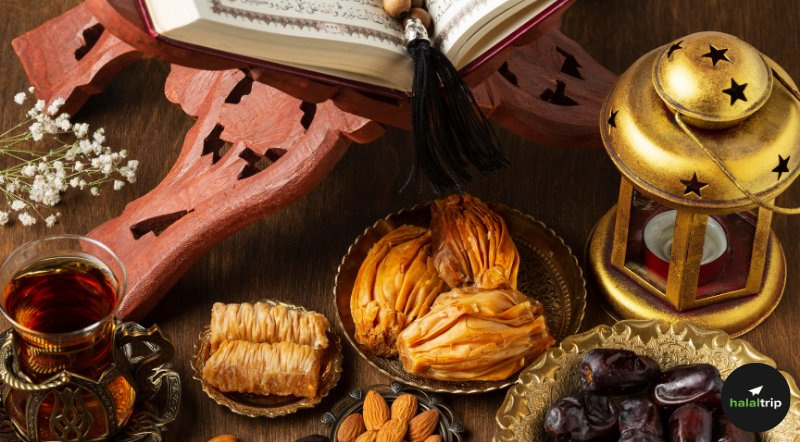
There is a specific kind of silence that falls just minutes before Maghrib. In those final moments of the fast, our gratitude is at its peak. We are acutely aware of the blessing of a single date and a glass of water. But often, the moment the Adhan finishes, that profound sense of restraint vanishes, replaced by a table overflowing with more than we could—or should—consume.
As we navigate this first week of Ramadan 2026, it is worth asking: If we can restrain our souls from the permissible for fifteen hours, why do we struggle to restrain our plates for twenty minutes?
It is a natural human instinct to want to "reward" ourselves after a day of discipline. We walk through Ramadan bazaars, and our eyes buy more than our stomachs can hold. This "compensation eating" often leads to the very things Ramadan seeks to diminish: lethargy, waste, and a dulling of the spiritual clarity we spent all day cultivating.
Moderation isn't about deprivation; it is about Barakah (blessing). There is profound Prophetic wisdom in the "one-third" rule—one-third for food, one-third for water, and one-third for air. When we leave space in our bodies, we leave space for our Iman to breathe during Tarawih.
Gratitude (Shukur) is best expressed through how we treat the provision. When we overfill our tables only to discard the leftovers, we risk losing the very lesson the hunger was meant to teach us.
This year, try a "Gentle Iftar" approach:
Every bite we take in Ramadan can be an act of worship if it is done with presence. When we choose moderation, we are telling our Nafs (ego) that it is not in charge. We are proving that the discipline we practiced under the sun can survive under the evening lights.
This Ramadan, let our tables reflect our hearts: simple, grateful, and focused on what truly matters.

