
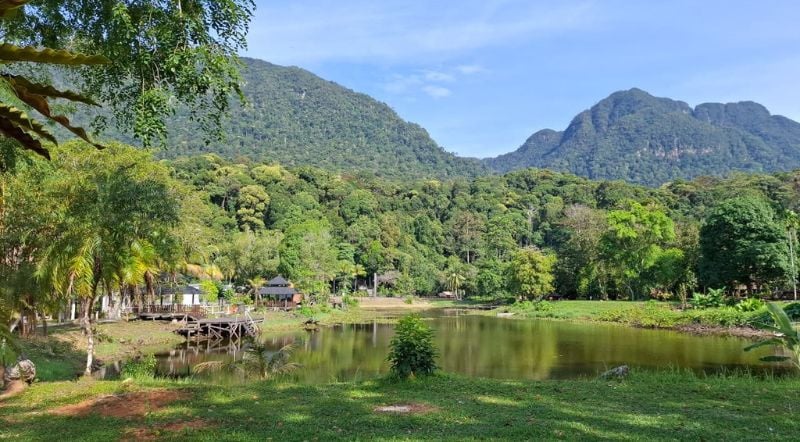
Kuching wakes to the coolness of the morning mist and the warm scent of damp earth. This is Sarawak’s capital, a city that moves to the rhythm of the rainforest and the heartbeat of its collective cultures. For travelers who crave both peace and discovery, Semenggoh Nature Reserve and Sarawak Cultural Village best capture this balance.
At Semenggoh, orangutans roam through emerald canopies just beyond the city’s edge. At the Cultural Village, centuries of stories echo through wooden longhouses framed by Mount Santubong. Together, they reveal the wild heart and gentle soul of Sarawak; a place where faith, nature, and community thrive side by side.
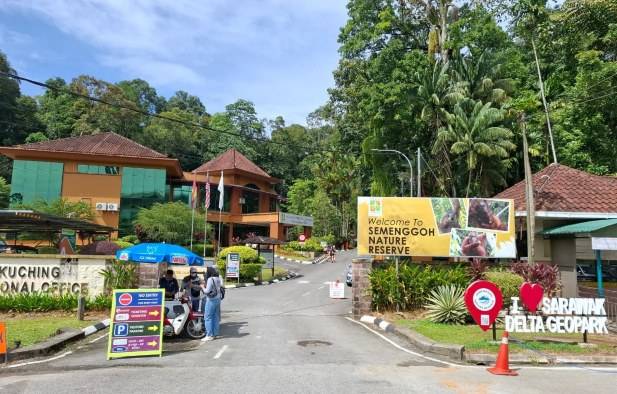
The forest at Semenggoh hums with life. Leaves rustle high above, cicadas sing, and sunlight filters through tall dipterocarps. Visitors gather quietly along a shaded trail, waiting for the first rustle of branches, if they’re lucky. And they just might be. Swinging in as if on cue, an orangutan appears; calm, curious, and unmistakably at home.
Located about twenty kilometers from Kuching, Semenggoh Nature Reserve is a sanctuary, not a zoo. Here, rescued and orphaned orangutans live freely in their natural environment. Visitors are reminded to keep their distance, never feed the animals, and let the forest dictate the pace. Watching these creatures swing effortlessly through the canopy feels humbling, a reminder that we are guests in their world.
From the front gate, visitors can take a buggy car ride through the park, enjoying the fresh breeze and natural surroundings while passing welcoming boards introducing each resident orangutan by name. Feeding sessions take place twice a day, in the cool hours of morning and late afternoon. The reserve offers simple facilities and is easily reached by taxi or tour bus. Halal food options can also be found nearby in Kuching, making the experience comfortable for Muslim travelers.

Image Credit: Semenggoh Wildlife Centre on Instagram
Did you know that baby orangutans stay by their mothers’ side for the first seven years of their lives? In their commitment to these formative years, mothers only give birth every seven to nine years. Which is why the luckiest visitors might get to see a trio: baby and mum, and a newly independent 8 year old still staying close enough for good company.
In addition to meeting the graceful orangutans up close, you can explore a mini gallery and browse a small souvenir shop that also sells cold drinks as the afternoon sun starts to edge in. Don’t miss the information board! It introduces every orangutan in the reserve, complete with their birth years and charming fun facts.
Leaving Semenggoh, many visitors describe a new sense of gratitude for the people protecting the forest, for the chance to witness such grace, and for the reminder that respect is the truest form of connection.
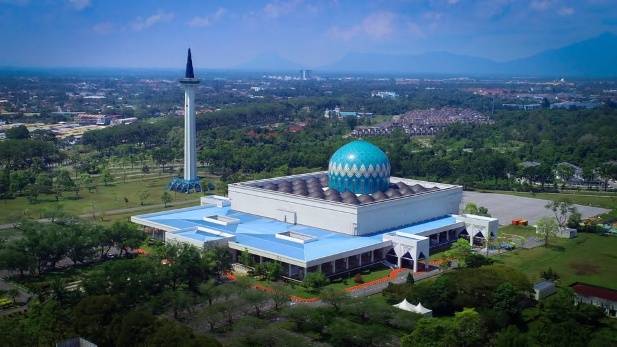
Image Credit: Masjid Jamek Negeri Sarawak on Facebook
While on your way to Sarawak Cultural Village, take a brief stop at the Masjid Jamek Negeri Sarawak for taking your prayers and resting your spirits. Located along Petra Jaya and overlooking the Sarawak River, the Mosque’s blue dome and elegant architecture will surely transport you to Istanbul, where the architecture’s inspiration lies. Surrounded by peaceful courtyards and landscaped gardens, Masjid Jamek Negeri Sarawak offers both worshippers and visitors a serene space that reflects the harmony and faith of Sarawak’s Muslim community.
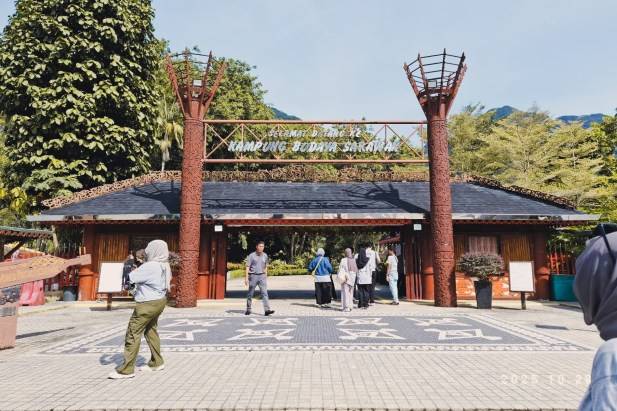
The drive from Semenggoh to the coast is a gentle shift from green wilderness to the hum of human stories. At the foot of Mount Santubong lies Sarawak Cultural Village, a living museum that gathers the state’s many ethnic groups into one welcoming space.
Here, travelers can wander between traditional longhouses built by the Iban, Bidayuh, Melanau, and Orang Ulu peoples. Additionally, there are also traditional houses of the Melayu and Chinese people. The air carries the scent of wood smoke and rice, and the steady rhythm of drums draws visitors toward every attraction. Each home offers a glimpse of daily life, with intricate weaving, carved canoes, bamboo instruments; and a story passed through generations.
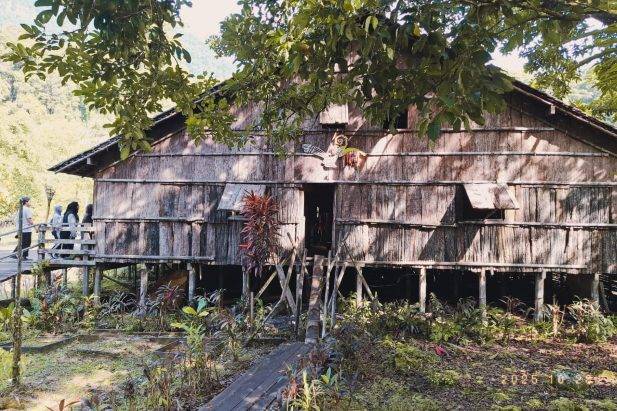
For Muslim travelers, the experience is as comfortable as it is eye-opening. The Restaurant Budaya inside the village serves Halal-certified local dishes, and prayer facilities are available for those who wish to pause and reflect. The community welcomes guests with respect, inviting them to learn rather than simply look. It is a reminder that cultural appreciation begins with humility, listening, and gratitude.
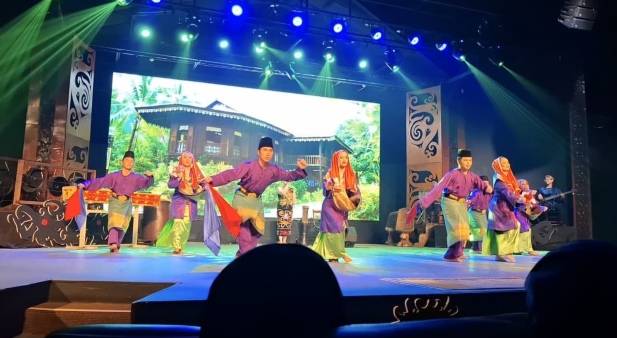
When you’re visiting, don’t forget to check their theatre timings to experience the daily cultural performances, showcasing various music arrangements and traditional dances from different ethnic groups in Sarawak. From the dance of Orang Ulu to Tari Zapin, the show will definitely leave you amazed.
Though the settings could not be more different; one a forest sanctuary alive with rustling leaves, the other a village echoing with song, both Semenggoh and the Cultural Village tell the same story of harmony. In Sarawak, nature and culture are not separate worlds but branches of the same tree.
The orangutans of Semenggoh teach patience and care for creation, while the longhouse communities remind visitors of shared humanity and heritage. For Muslim travelers, these experiences connect deeply with the values of stewardship, respect, and reflection. Each encounter, whether with the forest or its people, reveals a piece of Kuching’s true soul; a place that nourishes both curiosity and conscience.
Kuching makes it easy to experience both nature and culture in a single day. The city is compact, calm, and well connected, with Semenggoh Nature Reserve about thirty minutes from the city and Sarawak Cultural Village roughly forty minutes away in the opposite direction.
A perfect itinerary begins in the cool morning air of Semenggoh, where visitors can catch the first orangutan feeding before the forest warms. After a quick break for prayers and lunch in the city at one of Kuching’s many Halal-certified cafés and restaurants, the afternoon can be spent at the Cultural Village exploring longhouses and enjoying the lively cultural performance that usually starts around mid-afternoon.
Pack light, wear comfortable shoes, and bring water, sunscreen, and insect repellent. Prayer spaces are available in both areas or nearby, and Halal food is never far away. Most of all, take your time!
As the day fades, the forest quiets and the drums at the Cultural Village fall still. The sky turns gold over Mount Santubong, and the air feels alive with gratitude. Kuching leaves its mark not through grandeur, but through gentleness; the kindness of its people, the calm of its landscapes, and the way every story, from the rainforest to the riverbank, carries the same heartbeat.
For Muslim travelers, this journey is more than sightseeing. It is a moment to reconnect with creation and community, to see how respect can shape every encounter, and to remember that faith and wonder walk hand in hand. In Kuching, every step tells a story, and every story leads back to the soul of Sarawak.

