
While the iconic arches of Cordoba and the golden palaces of Granada often steal the spotlight, the story of Al-Andalus reached far beyond the borders of modern-day Andalusia. Across the Mediterranean islands, along the rugged northern frontiers, and even onto the African continent, Spain is dotted with "off the beaten path" destinations where the Andalusi legacy is still deeply present. For the curious traveler, these sites offer a quieter, more intimate connection to a history that shaped the entire Iberian Peninsula.
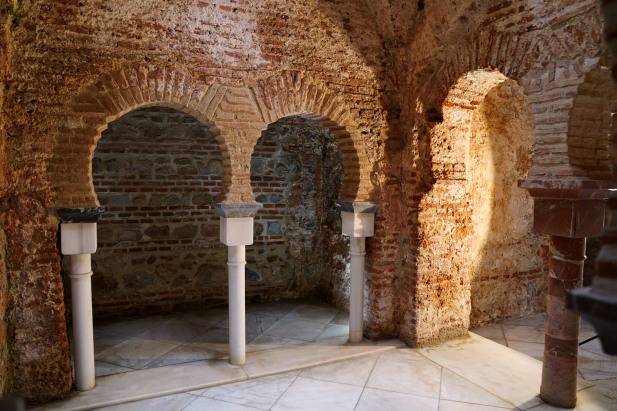
To truly understand the crossroads between Europe and the Islamic world, one must look toward Ceuta and Melilla. These autonomous Spanish cities sit on the northern coast of Africa, acting as vibrant cultural bridges between the two worlds. Both cities hold deep Islamic history that predates their modern status.
Ceuta was deeply shaped by over 700 years of successive Muslim polities, while Melilla happened to be connected to the Caliphate of Cordoba and later dynasties as an important stronghold. This history lives on as an essential part of the city; visible in their historic quarters, defensive walls, and archaeological remains. Today, the fusion of Maghrebi and Spanish traditions creates a unique atmosphere in both cities, where Halal food and mosques are an integral part of the daily landscape.
Mallorca and Ibiza are world-renowned for their turquoise waters and exotic beaches, yet these islands were thriving centers of Al-Andalus trade and culture for more than three centuries.
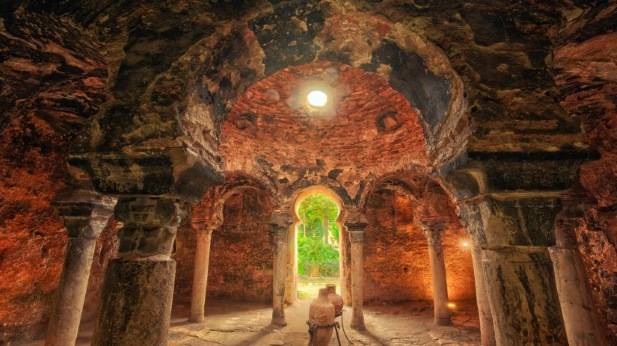
Photo of the Arab Baths
The capital, Palma, was once a crucial Mediterranean centre; and this can be seen today in how over 80% of its old town still holds the same Andalusi medieval layout. The city still preserves the Arab Baths, a serene remnant of the city’s Muslim past.
Another important Islamic legacy is the La Almudaina Palace, which was originally built as the Muslim governors’ residence. Overlooking the sea, the palace is now the Spanish royal family’s summer holiday residence.
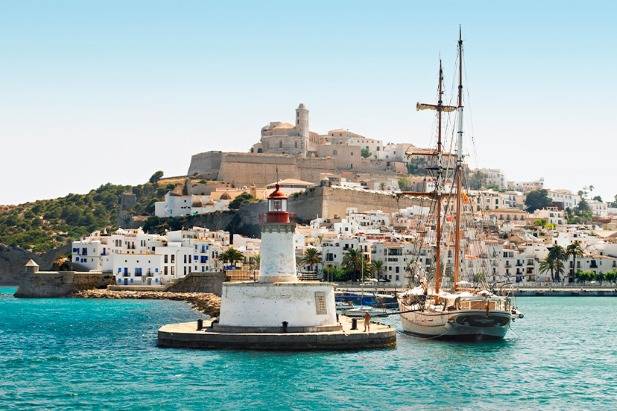
The historic Dalt Vila district still holds the traces of its defensive walls. Do not miss the Drassana Arch, which once functioned as the seaward gateway to Madina Mayurqa; and the quiet, winding streets of Alcudia in northeastern Mallorca that was once a Muslim settlement. Both offer a glimpse into the sophisticated urban planning of the 10th century.
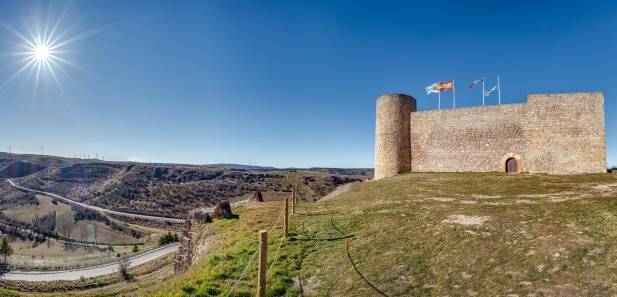
Photo of Medinacelli
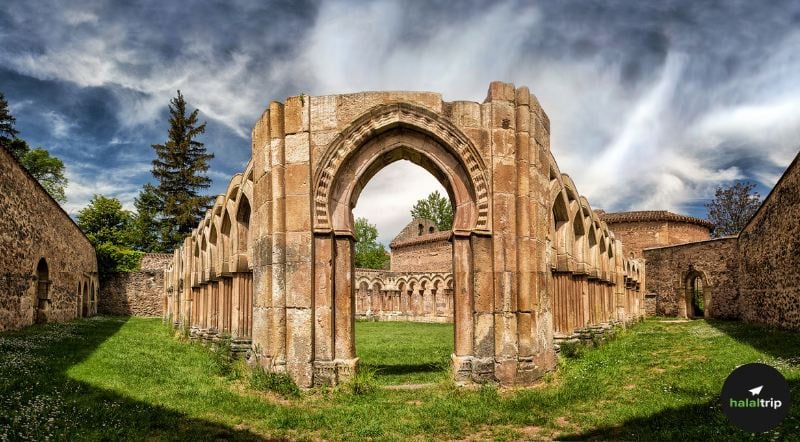
Located in the heart of the peninsula, Soria was an essential defensive region during the Al-Andalus period. Its strategic position along the natural border formed by the Duero River turned it into a land of castles, defensive enclaves, watchtowers, and fortified towns.
The rugged plains of Extremadura were once the "High Frontier" of the Almohad Caliphate, leaving behind some of the most impressive military architecture in Spain.
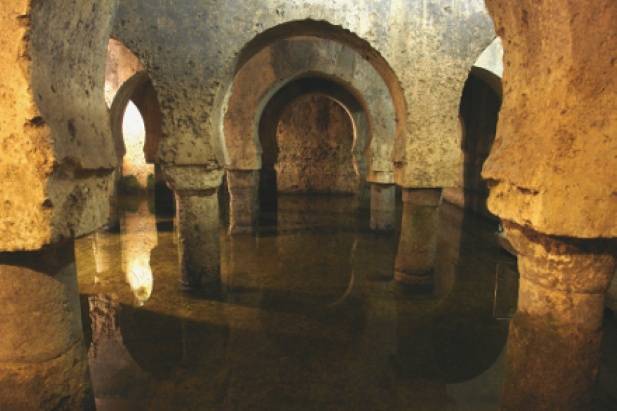
Hidden beneath the city’s museum lies an extraordinary Almohad cistern (Aljibe). This underground water reservoir, with its quiet arches and calm waters, is one of the best-preserved in the world. Nearby, the Bujaco Tower and more than 15 other surviving towers stand as a reminder of the city’s ancient fortifications.
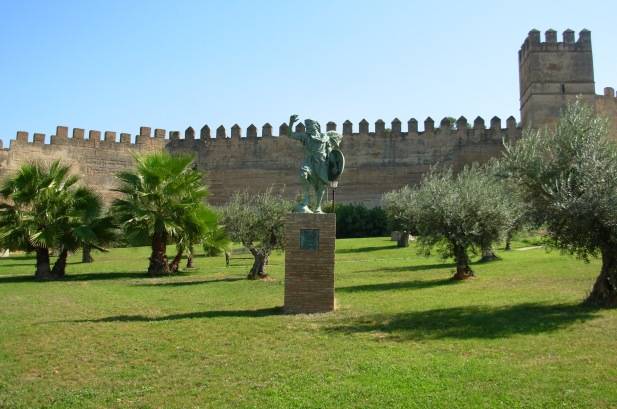
Founded by Ibn Marwān in the 9th century, this city boasts one of the oldest and largest alcazabas (citadels) in Spain. A statue of Ibn Marwan stands proudly near the walls, honoring the Muslim founder who chose this strategic site overlooking the Guadiana River.
Exploring these "other" footprints reminds us that history is not confined to a single region. From the cisterns of Extremadura to the hilltop castles of Soria and the sun-drenched baths of Mallorca, the spirit of Al-Andalus is a tapestry woven across the entire Spanish landscape.
Find more Al-Andalus stories across the country inside the Halal Travel Guide to Spain!

