
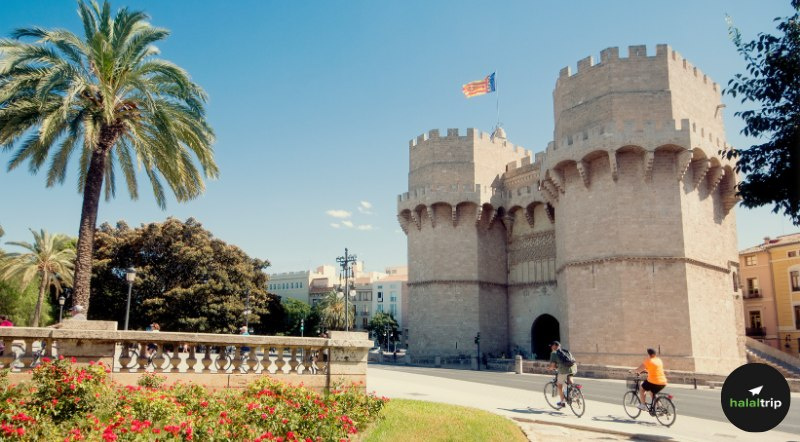
While many flock to Valencia for its sun-drenched beaches and ultra-modern architecture, the city is actually a living tapestry of history. Beneath its vibrant surface lies a deep Arab legacy that shaped the region’s soul for over five hundred years. Known as Balansiya during the Al-Andalus era, Valencia became a hub of science, poetry, and agricultural genius. Today, Muslim travelers will find a city that feels both exotic and familiar, where ancient wisdom and modern hospitality blend seamlessly.
In 714 AD, Valencia entered its Islamic era, transforming from a modest Roman settlement into a flourishing Mediterranean power. Under the Taifa of Valencia—which is a medieval Muslim kingdom, the initially dry and dusty city also known as “City of Sand” then turned into a fertile paradise. The Arabs introduced revolutionary irrigation systems, the cultivation of citrus fruits, and the silk industry. This was a golden age of wisdom where the fertile land (the Huerta) was born; a gift that continues to feed Valencia to this day.
The remains of the once prosperous Islamic kingdom can still be traced in the city. Below are a few destinations you must visit to witness Valencia’s Islamic legacy and enjoy your travel:
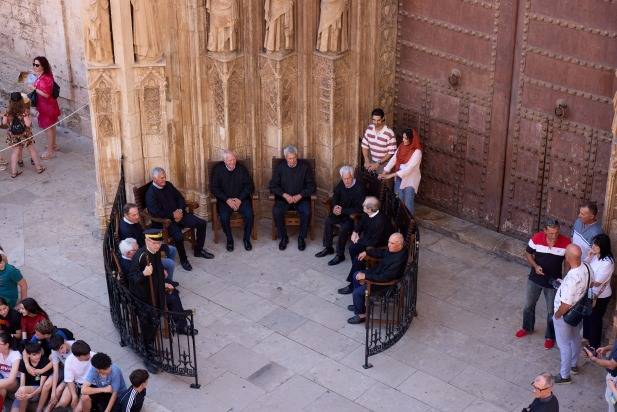
For a true glimpse into living history, visit the Apostles' Door of the Valencia Cathedral on any Thursday at noon. Here, the Water Tribunal meets—the oldest justice institution in Europe. Established during the Caliphate of Córdoba, this court still settles irrigation disputes orally in the Valencian language. It is a direct legacy of the Islamic "wisdom of water," ensuring fair distribution for the farmers of the region.
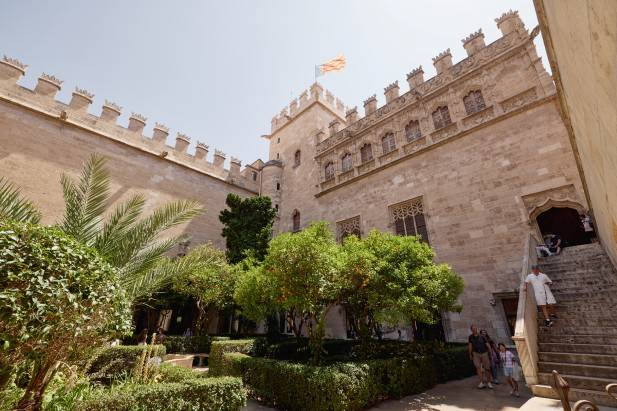
Though built in the late Gothic style, this UNESCO World Heritage site is a tribute to the silk industry brought to Valencia by the Arabs. Its towering, twisted columns and majestic hall reflect the immense wealth generated by the Mediterranean silk trade. Look closely at the gargoyles and intricate stone carvings; they echo the cosmopolitan spirit of a city that was once the silk capital of the West.
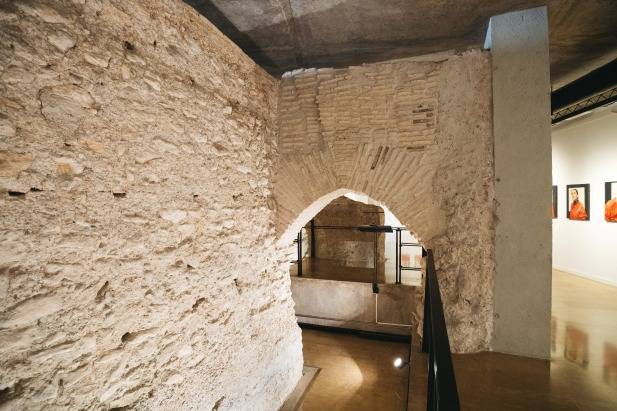
To touch the physical "Past," go underground at the Tossal Gallery. This museum preserves a significant section of the 11th-century Islamic wall and a gateway that once protected the citadel. Seeing the original flint and limestone masonry provides a quiet, reflective moment to appreciate the scale of ancient Balansiya.
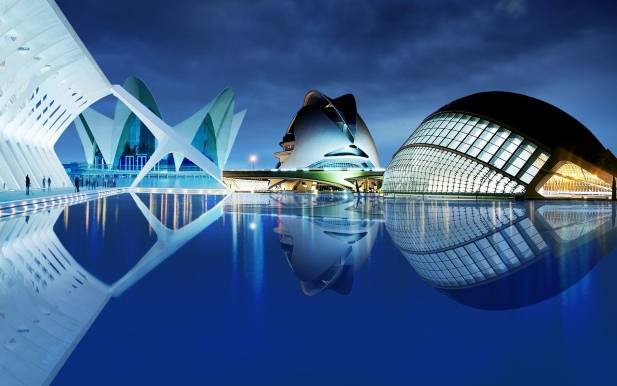
Representing the present, this futuristic complex, designed by Santiago Calatrava, is a masterclass in geometry. While entirely modern, its use of water, light, and white concrete mirrors the core elements of traditional Islamic architecture, where water is used to cool the air and reflect the beauty of the structure.
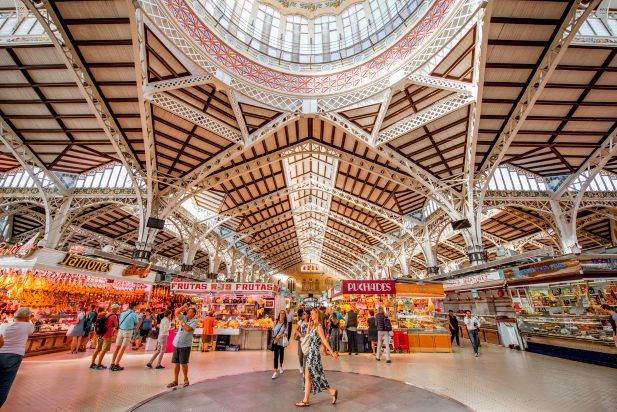
The site of this spectacular Modernist market has been a place of trade since the 9th-century Muslim zoco (souq). Today, it is one of Europe's largest fresh food markets. For the Muslim traveler, it’s a sensory delight filled with seasonal fruits, fresh olives, and spices that trace their origins back to the trade routes of Al-Andalus.
Valencia perfectly describes how history meets the future, as it allows you to immerse yourself in historic and well-preserved Islamic legacy, while also exploring modern futuristic buildings. It is a one-stop-for-all destination, perfect for Muslim travelers.
The city offers numerous options of Halal dishes for Muslim travelers. Below are a few recommendations to try:
To take your prayer breaks, visit the Gran Mezquita de Valencia, the central hub for the local Muslim community. It is a beautiful, welcoming space located near the university area, offering daily prayers and a sense of community for visitors.
These three hotels offer Halal food and alcohol-free rooms with a request in advance. They are also located close to Halal restaurants, so filling your energy to travel the city wouldn’t be a problem.
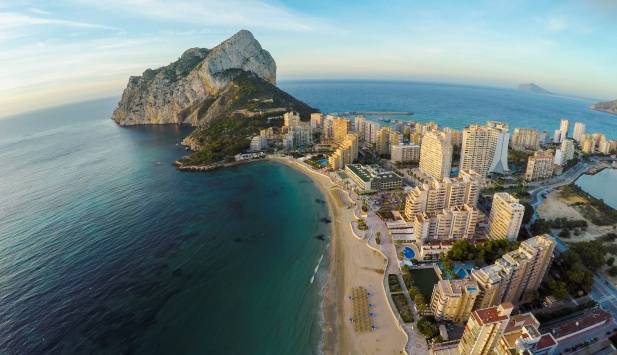
If you have an extra day, these nearby gems offer even more glimpses into the region's natural beauty and fortified history:
Valencia is a city where history isn't just kept in books; it’s heard in the splash of the irrigation canals and tasted in every grain of rice. For the Muslim traveler, a journey through Valencia is more than a holiday—it is a homecoming to a heritage of wisdom and beauty that has never truly faded.
Learn more about Valencia’s living Islamic traditions in Spain’s Halal Travel Guide - now downloadable on HalalTrip!

