
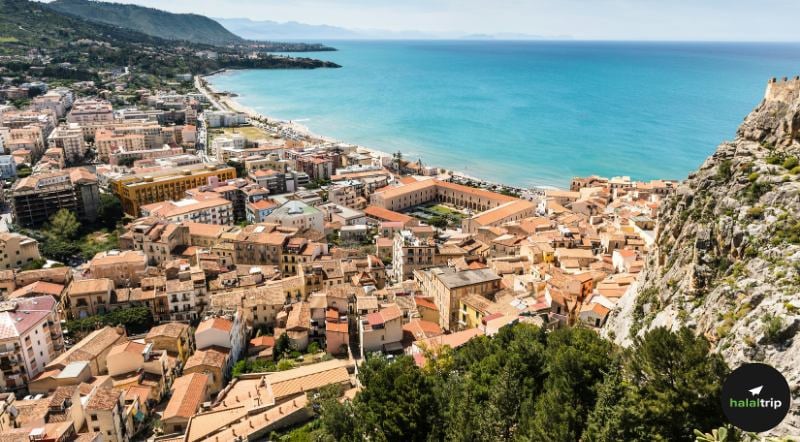
When people picture Madrid, they often think of bustling tapas plazas, grand royal palaces, and wide boulevard avenues. When they imagine Sicily, pictures of rocky coastal cliffs, ancient Greek theater ruins, and bustling Italian markets come to mind. Yet, buried just beneath the surface of these iconic European destinations lies a rich, transformative history that connects them to medieval Islamic civilization.
Long before Madrid became the Spanish capital, it was founded as a ninth century Muslim garrison town named Mayrit. Farther south across the Mediterranean, the Emirate of Sicily flourished for over two centuries, creating a brilliant agricultural, scientific, and artistic center whose legacy still echoes in Sicilian speech, food, and stone. Exploring these forgotten origins offers Muslim travelers a deeply rewarding way to connect with European history.
In the middle of the ninth century, Emir Muhammad I of Cordoba sought to protect the northern borders of Al Andalus. Perched on a steep hill overlooking the Manzanares River, he ordered the construction of a strategic military garrison. The settlement took its name from the Arabic word Mayrit, referring to a network of water channels and underground springs that nourished the arid hilltop settlement.
To sustain life in this fortress town, Muslim hydraulic engineers introduced sophisticated water systems known as qanat and mayra. These underground galleries tapped into subterranean water tables, carrying fresh spring water over long distances through gravity fed tunnels without losing water to desert evaporation. This hydraulic marvel proved so vital that when Spanish rulers made Madrid their official capital centuries later, the abundant water supply built by Muslim engineers remained one of the primary deciding factors.
Today, travelers can still find physical traces of Islamic Mayrit tucked into corners of Madrid. In the Park of Muhammad I near the Royal Palace, a surviving stretch of ninth century stone fortification wall stands as a silent witness to the city founders. Beneath the cobblestones of Plaza de los Carros, small bronze markers trace the historic path of ancient underground mayra channels. Winding through the historic neighborhood of La Latina, visitors can admire Mudejar brick bell towers like that of the Church of San Nicolás, built directly over former mosque foundations by skilled Muslim artisans who remained in the city.
While Mayrit guarded the northern Iberian frontier, the island of Sicily was undergoing its own dramatic rebirth under Islamic rule. Starting in the ninth century, Muslim rule transformed the island into a vibrant crossroads of Mediterranean commerce and culture. The capital city of Palermo, known in Arabic as Balarm, grew into one of the largest and most prosperous cities in medieval Europe, rivaled only by Cordoba and Cairo.
Muslim rule transformed Sicilian agriculture forever. Settlers introduced advanced irrigation techniques alongside new crops that defined the Mediterranean diet, including oranges, lemons, pistachios, almonds, sugarcane, and eggplant. In western coastal regions like Trapani, the local tradition of serving fresh fish over steamed couscous remains a proud culinary link to North African heritage.
Even after Norman rulers assumed power in the late eleventh century, Islamic art and architectural mastery remained central to Sicilian life. Norman kings employed Muslim craftspeople to design their most grand palaces and royal chapels, giving birth to the world famous Arab Norman architectural style. Walking through Palermo today, visitors can admire the distinctive red domes of the Church of San Cataldo, the intricate wooden muqarnas ceiling paintings inside the Palatine Chapel, and the lush garden courtyards of the Zisa Palace, whose Arabic name Al Azizah translates to the splendid.
Uncovering the Islamic roots of Madrid and Sicily adds a rich layer of discovery to any European vacation. Beyond architectural landmarks, both regions offer vibrant local Muslim communities, accessible Halal food options ranging from authentic Mediterranean grills to traditional Arab dishes, and peaceful mosques located near historic city centers.
When you stroll through the winding alleyways of Palermo or trace the ancient stone walls of Madrid, you are walking through chapters of shared history where diverse cultures met, traded, and created enduring beauty.
History is rarely a straight line; it is a tapestry woven from many strands. The Islamic foundations of Madrid and Sicily remind us how deeply interconnected our world has always been, leaving behind water networks, architectural marvels, and culinary delights that enrich travelers to this day.


Neetuarora
This was a fascinating read! The shared Islamic heritage across the Mediterranean—especially in places like Madrid (Mayrit) and Sicily—is such an incredible yet frequently overlooked chapter of European history. It’s amazing how much of that architectural, cultural, and linguistic influence still quietly persists today. Thank you for shedding light on these forgotten roots https://jarvisreach.io/blog/what-is-janitor-ai/