
Dating back to the 7th century, the story of Islam in Vietnam is a fascinating one. It began when Arab Muslim traders first landed on the shores of the Champa Kingdom, leaving an influence that can still be felt today.
So how did Islam spread across Vietnam? And what is life like for Muslims in the country today? Let’s explore this rich and enduring history.


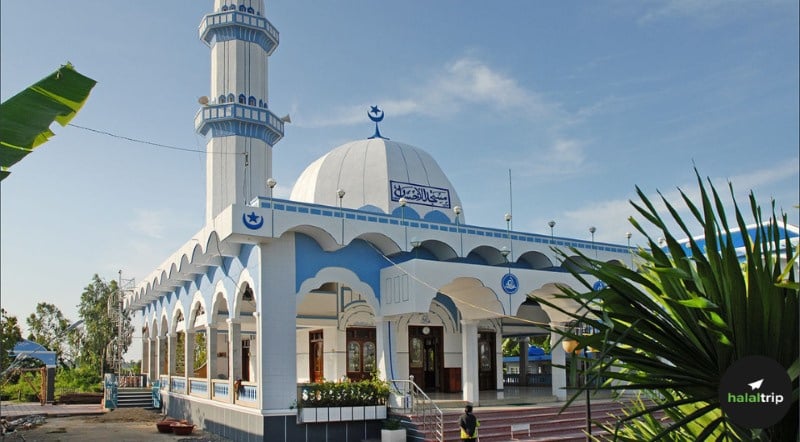
Al Ehsan Mosque of the Cham Community
Image Credit: Christophe95, CC BY-SA 4.0, via Wikimedia Commons
In central and southern Vietnam once stood the Champa Kingdom, home to the Cham people — seafarers, traders, and artisans. The Cham were originally Hindus and Buddhists who mastered navigation and maritime trade routes across the region.
Historians trace the arrival of Islam in Vietnam to the 7th century, when Arab Muslim traders came to do business with local merchants. Among those they met were the Cham traders living along the coast. Through these encounters, Islam slowly began to spread within the Champa Kingdom.
Some historians believe that Said Ibn Abi Waqqas, a companion of Prophet Muhammad (peace be upon him), may have been among the first Muslims to arrive in Vietnam — though this remains unconfirmed.
The Cham people found appeal in Islam’s teachings of unity, justice, morality, and simplicity. Their growing contact with Arab traders also strengthened commercial ties, encouraging more conversions. The Champa Kingdom was known for its tolerance toward different faiths, allowing Islam to take root without resistance.
Over time, even the rulers of Champa are said to have embraced Islam. Mosques and Islamic schools were established across the kingdom, helping to preserve and spread the faith throughout the region.
North of the Champa Kingdom lay the Vietnamese Kingdom, which gradually expanded its power. As it conquered more territory, the Champa Kingdom weakened and eventually fell in the 17th century after losing its capital city.
This marked a turning point for Islam in the region. With the Vietnamese Kingdom being predominantly Buddhist, tensions and conflict arose. Po Phaok The, the last Muslim king of Champa, led his people south toward Cambodia to seek refuge. Many others fled along the coast to Malaysia, particularly to Terengganu.
The Cham community that resettled in Cambodia lived across small villages, continuing to practice and teach Islam. They built ties with Malaysian Muslim traders and sent their children to study in Malaysia. When these students returned home, they became teachers and imams, passing down Islamic knowledge and ensuring the faith survived despite persecution and hardship.
Through their perseverance, Cham Muslims managed to preserve their religion, identity, and traditions across centuries.

Musulman Mosque in Ho Chi Minh City
Image Credit: Anilakeo, CC BY-SA 4.0, via Wikimedia Commons
The legacy of the Champa Kingdom can still be seen in Vietnam today — especially through the country’s mosques and architecture. Many mosques feature terracotta tiles and red brick, a design style rooted in Cham heritage.
Vietnam’s Muslim population today is small, but vibrant. The majority are Cham Muslims, while others come from diverse ethnic backgrounds. Mosques in Vietnam can be found in Ho Chi Minh City, An Giang, and Ninh Thuan, among other regions.
Interestingly, some of Vietnam’s most popular dishes, such as pho and banh mi, are believed to have Islamic culinary influences introduced through trade.
Despite historical challenges and past discrimination, the Muslim community in Vietnam remains peaceful, resilient, and active in contributing to the nation’s development. Many Muslim entrepreneurs have established successful businesses, and their presence continues to enrich Vietnam’s cultural and economic fabric.
While the government has introduced laws to support religious tolerance, the journey toward full acceptance and equality is still ongoing.
The history of Islam in Vietnam is one of endurance, adaptation, and faith. From its arrival in the Champa Kingdom to its presence in modern society, Islam has played a quiet but significant role in shaping the cultural and spiritual identity of the country.
Through centuries of migration, struggle, and resilience, the Cham Muslims have preserved their beliefs and traditions — standing as a testament to faith that endures through time.
Cover Image Credit: dalbera from Paris, France, CC BY 2.0, via Wikimedia Commons

